Places, in their own conditions.
Every location here is a field guide, not a listicle entry: when it reads best, how weather changes it, what the access really takes, and whether it earns the drive.
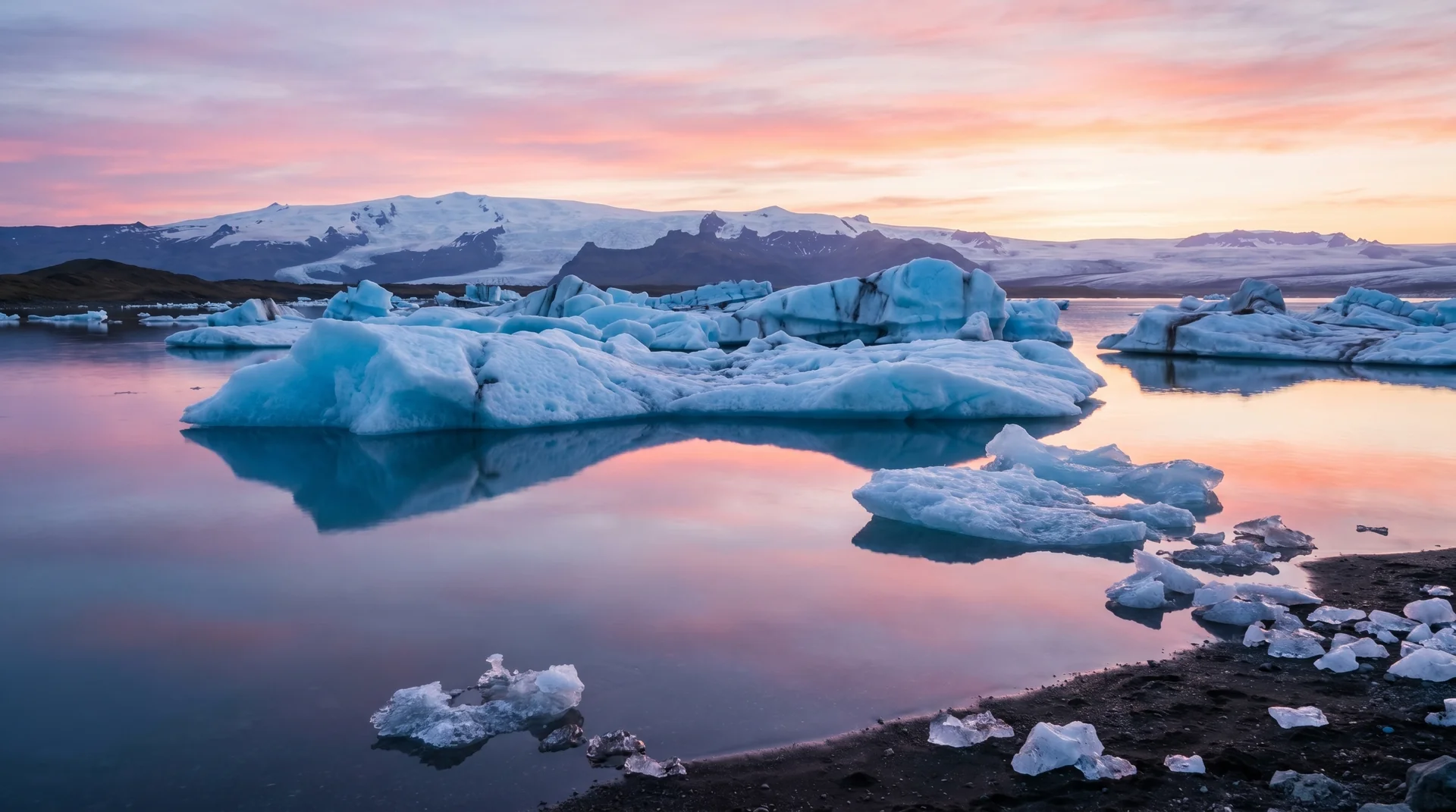
Jökulsárlón
A tidal lagoon where icebergs from Breiðamerkurjökull drift out to sea, then wash back onto a black sand beach.
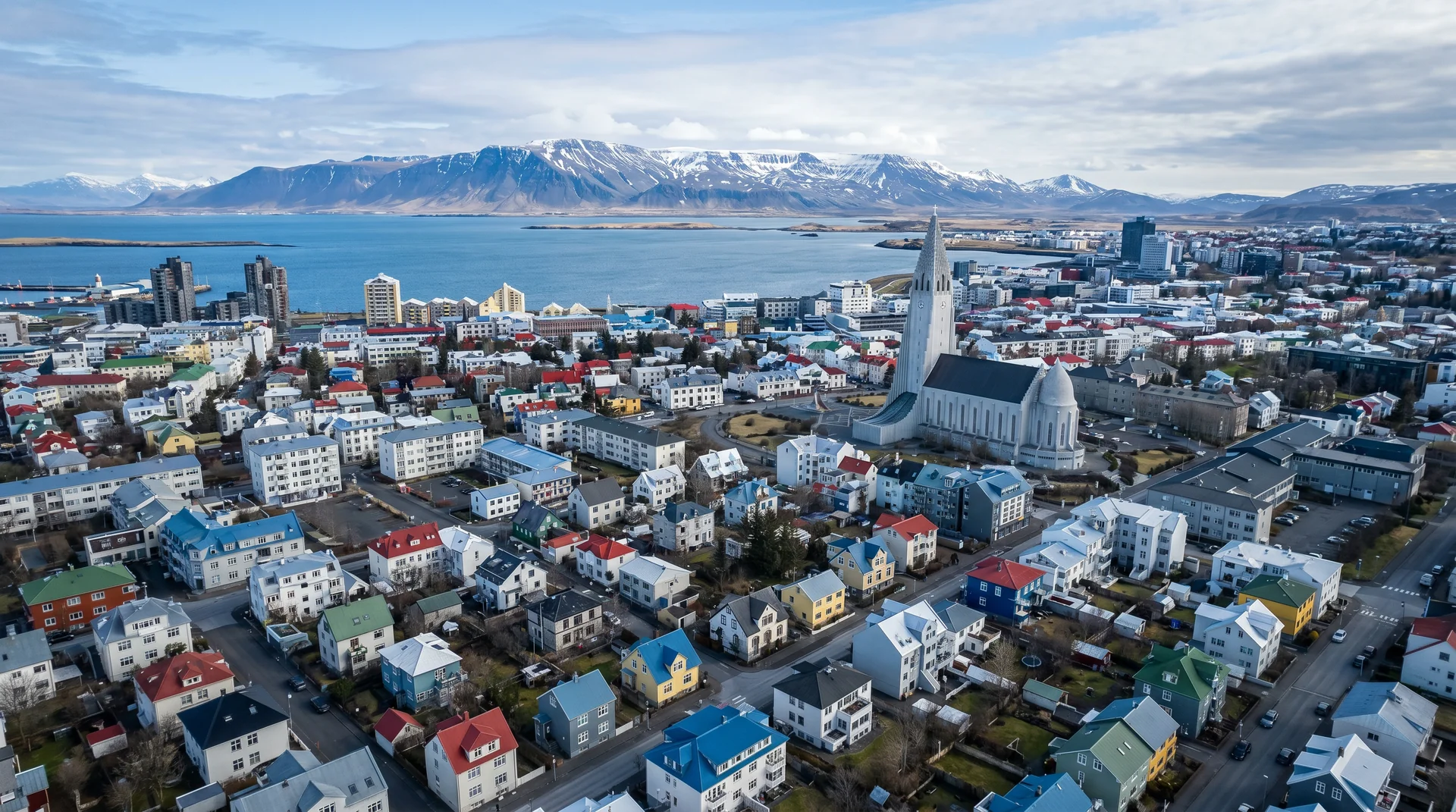
Reykjavík
The northernmost capital on Earth — and the launchpad for almost every Iceland trip.
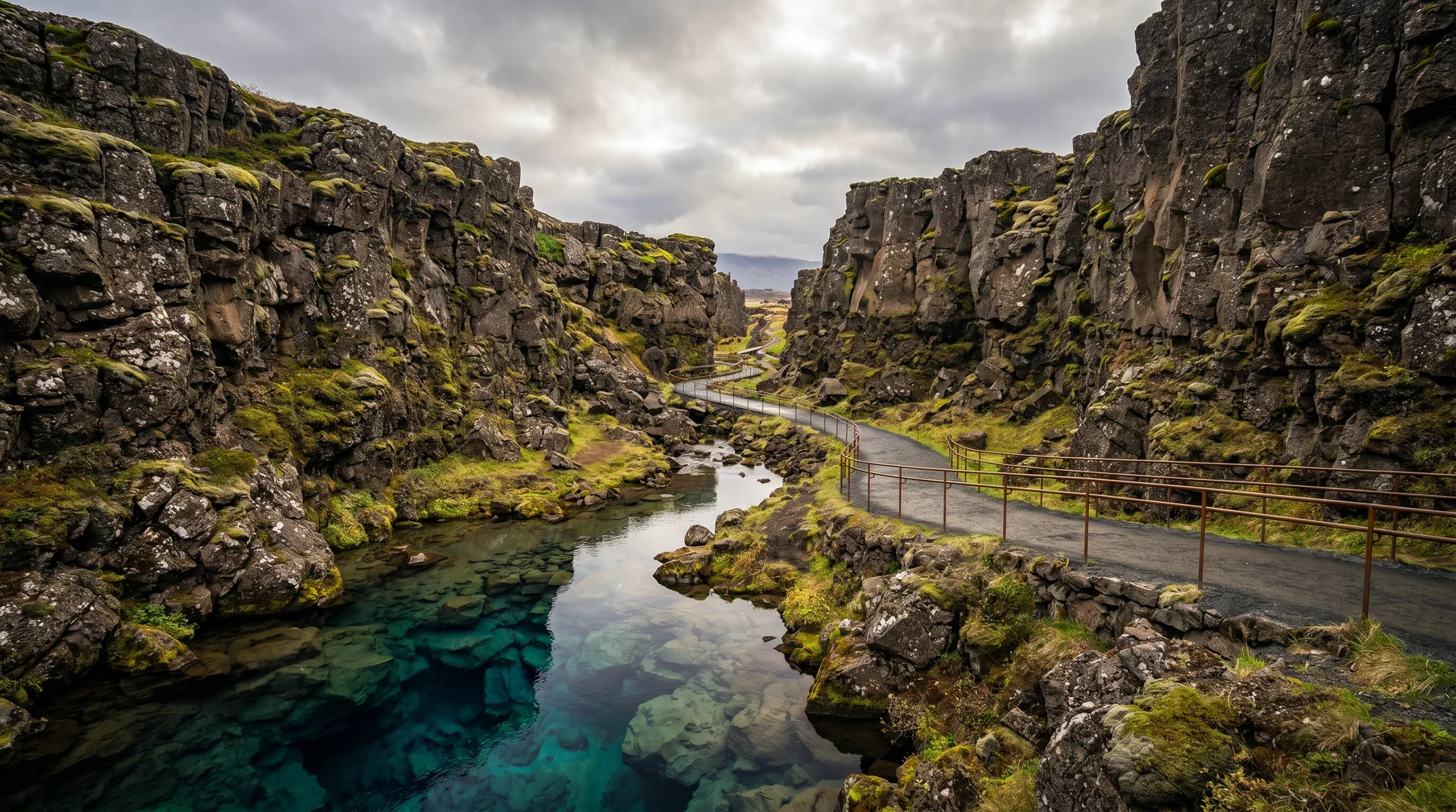
Þingvellir
The literal seam between two continents — and the field where Iceland's parliament met for nine centuries starting in 930 AD.
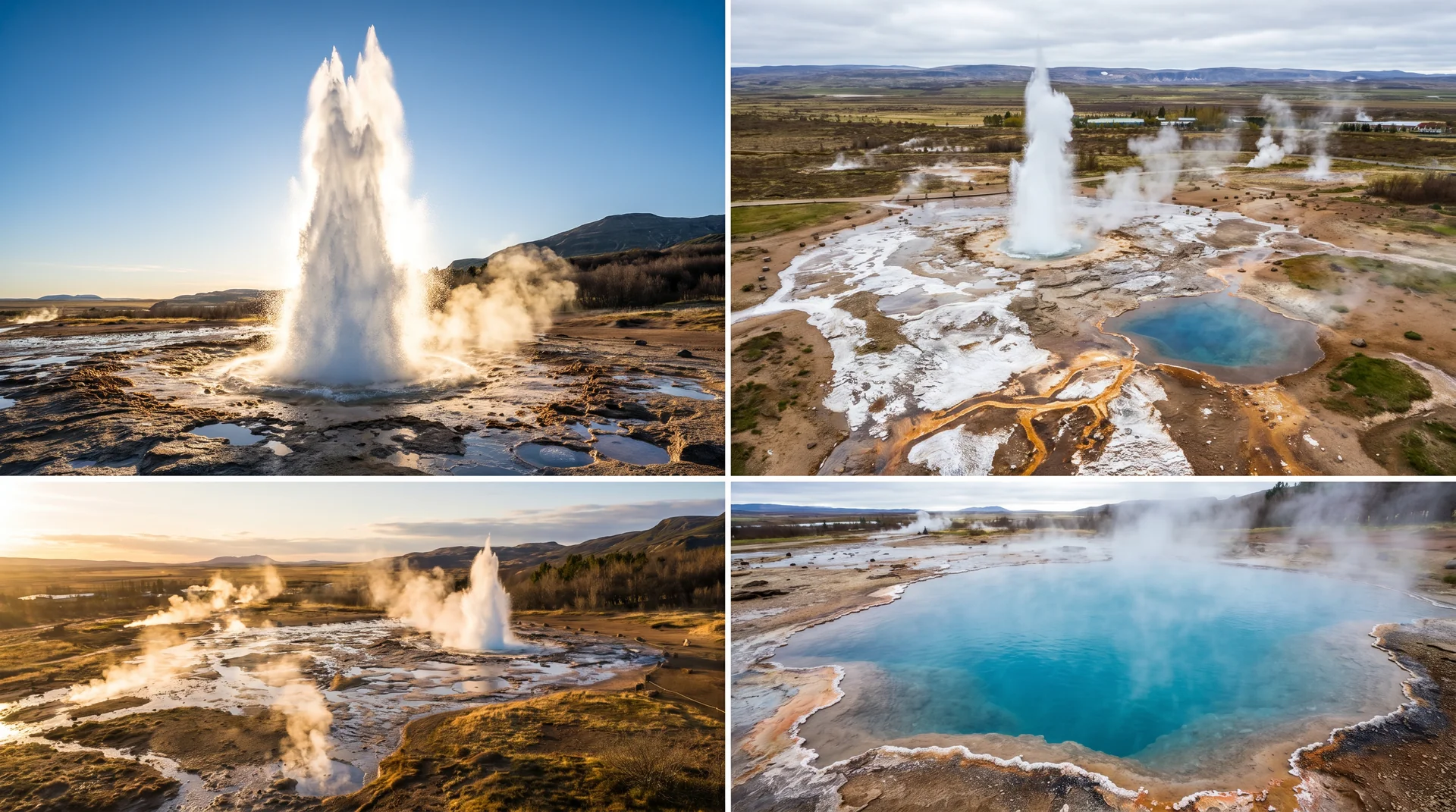
Geysir
The eponymous geyser.
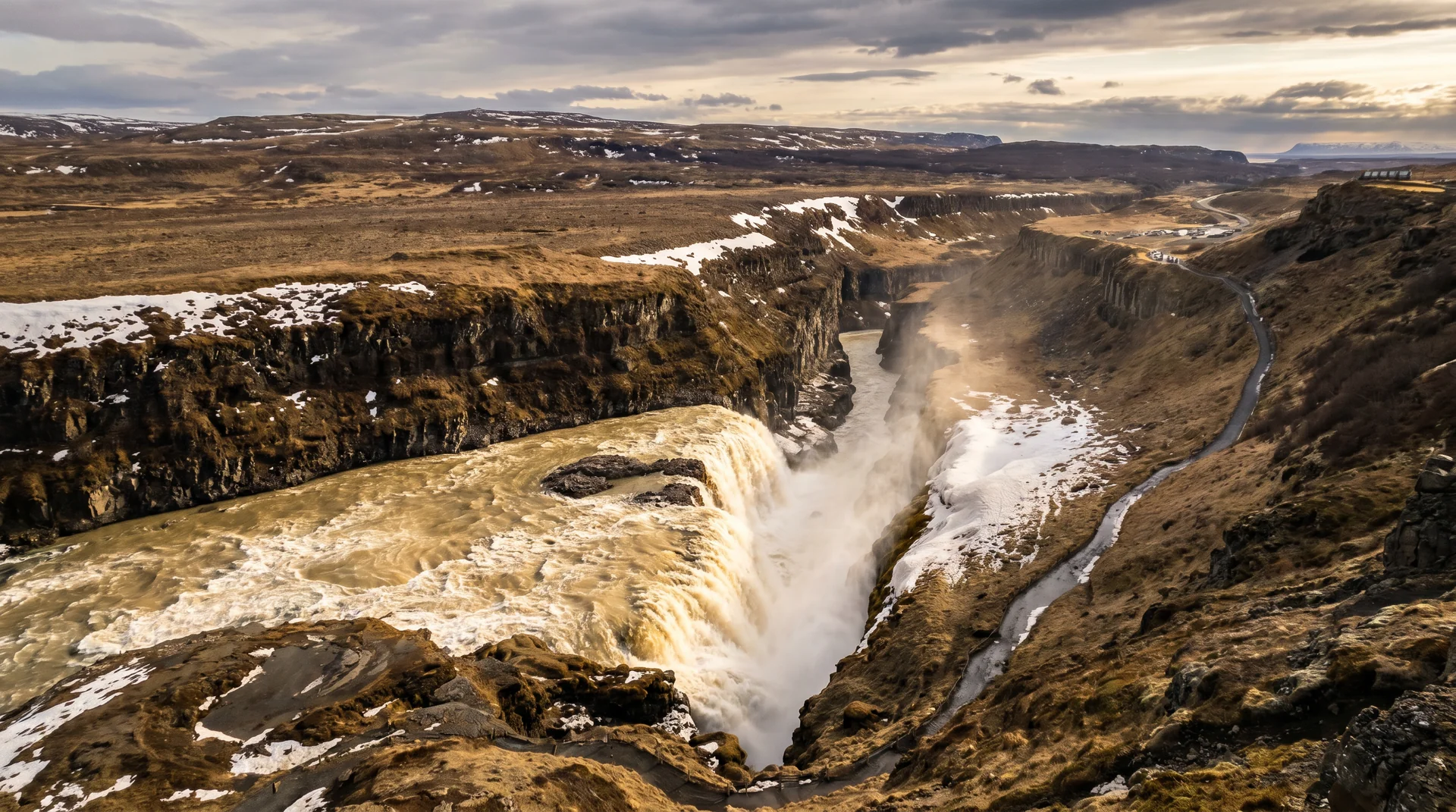
Gullfoss
Two stacked drops — 11 m then 21 m — that plunge into a 32 m basalt canyon.
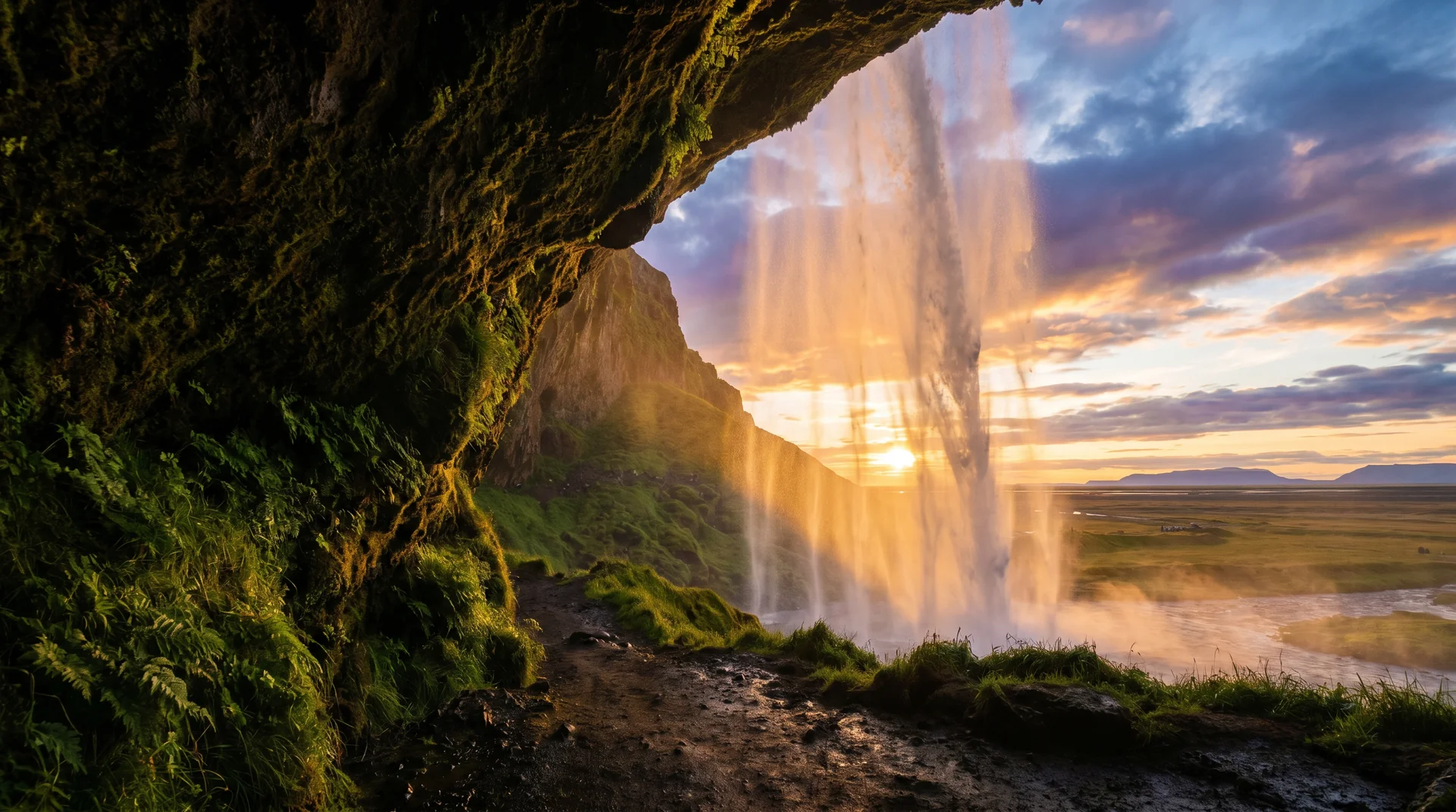
Seljalandsfoss
A 60-metre curtain you can walk behind in summer.
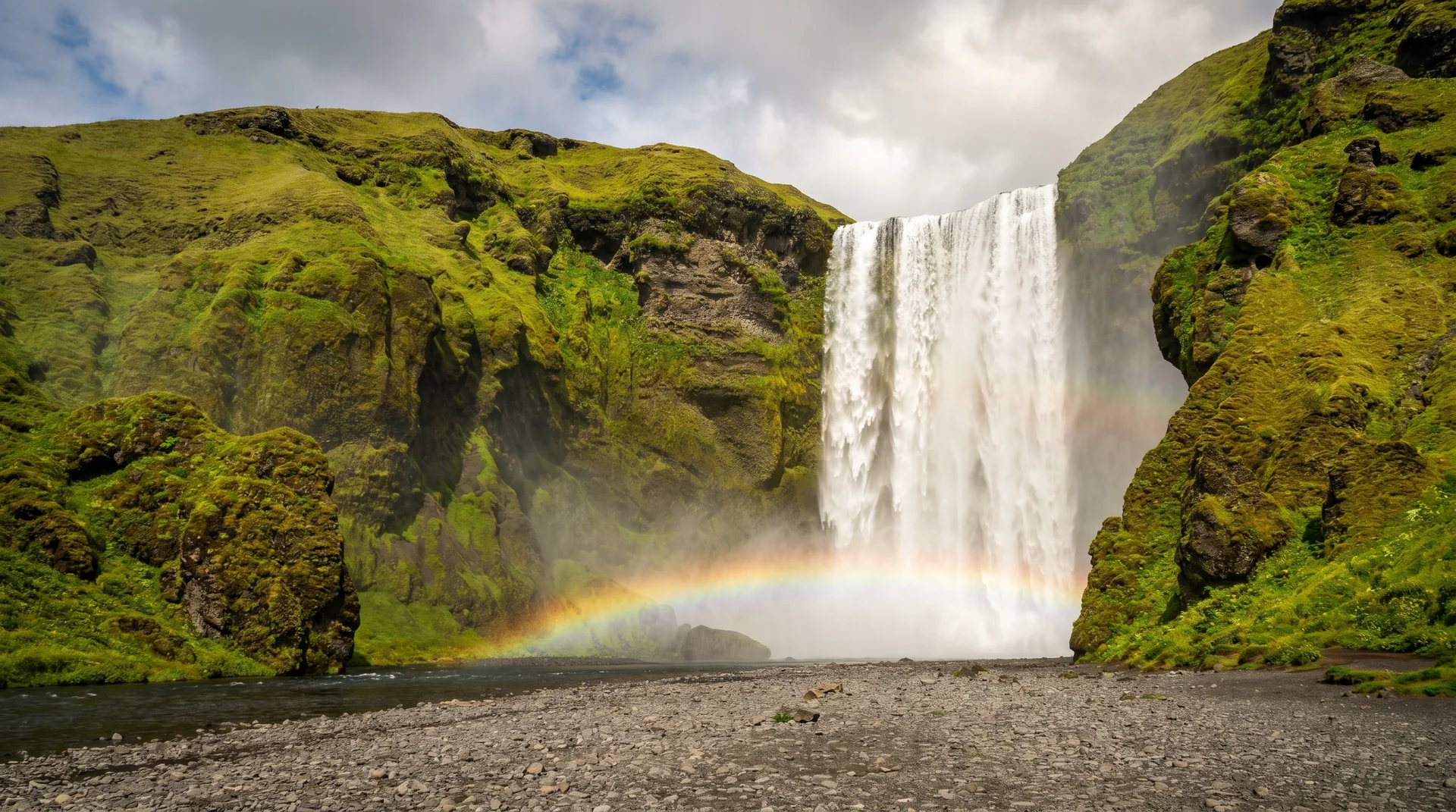
Skógafoss
60 metres of perfectly rectangular curtain, dropping onto a flat black-sand basin.
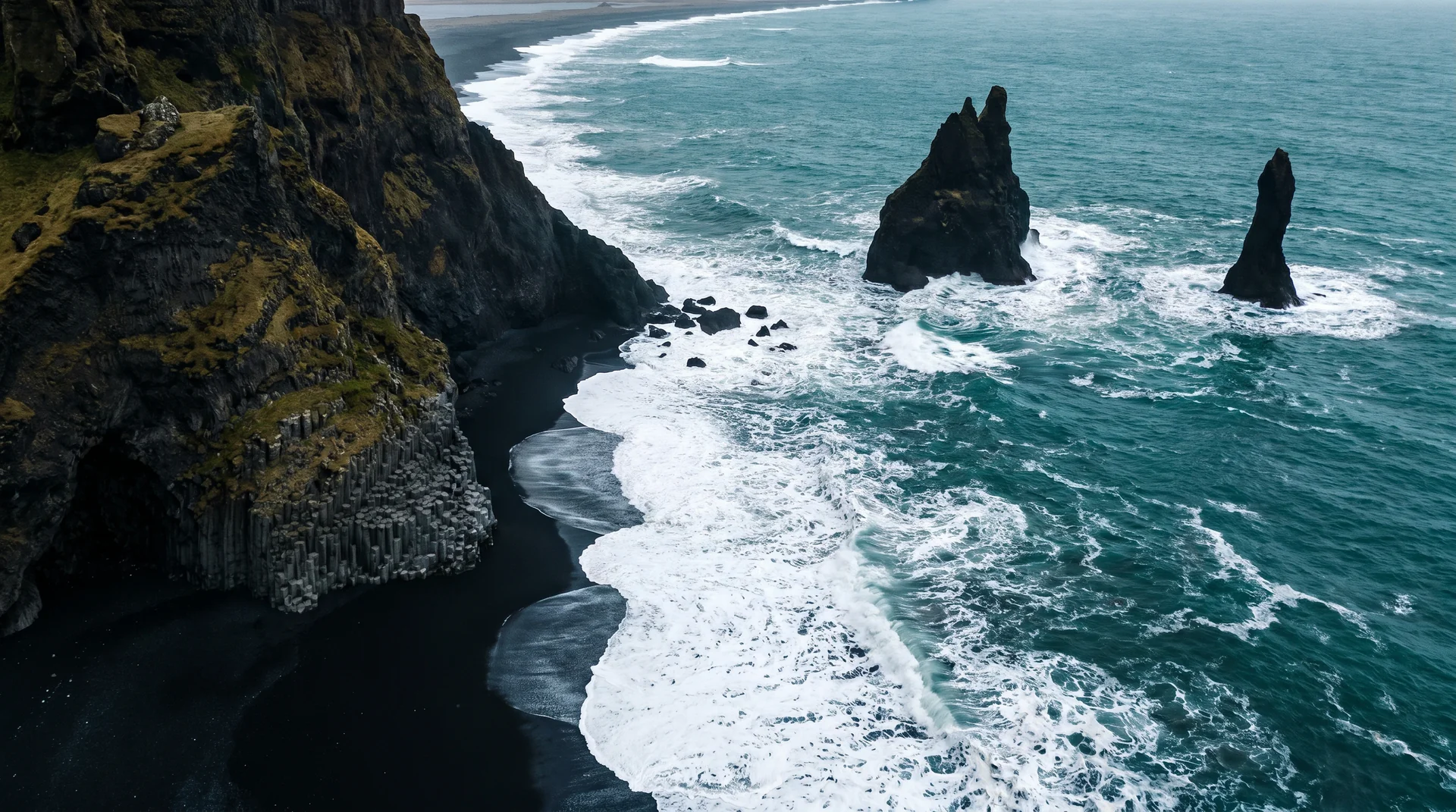
Reynisfjara
Black sand, hexagonal basalt columns, and the Atlantic — the most photographed beach in Iceland, and the most dangerous.
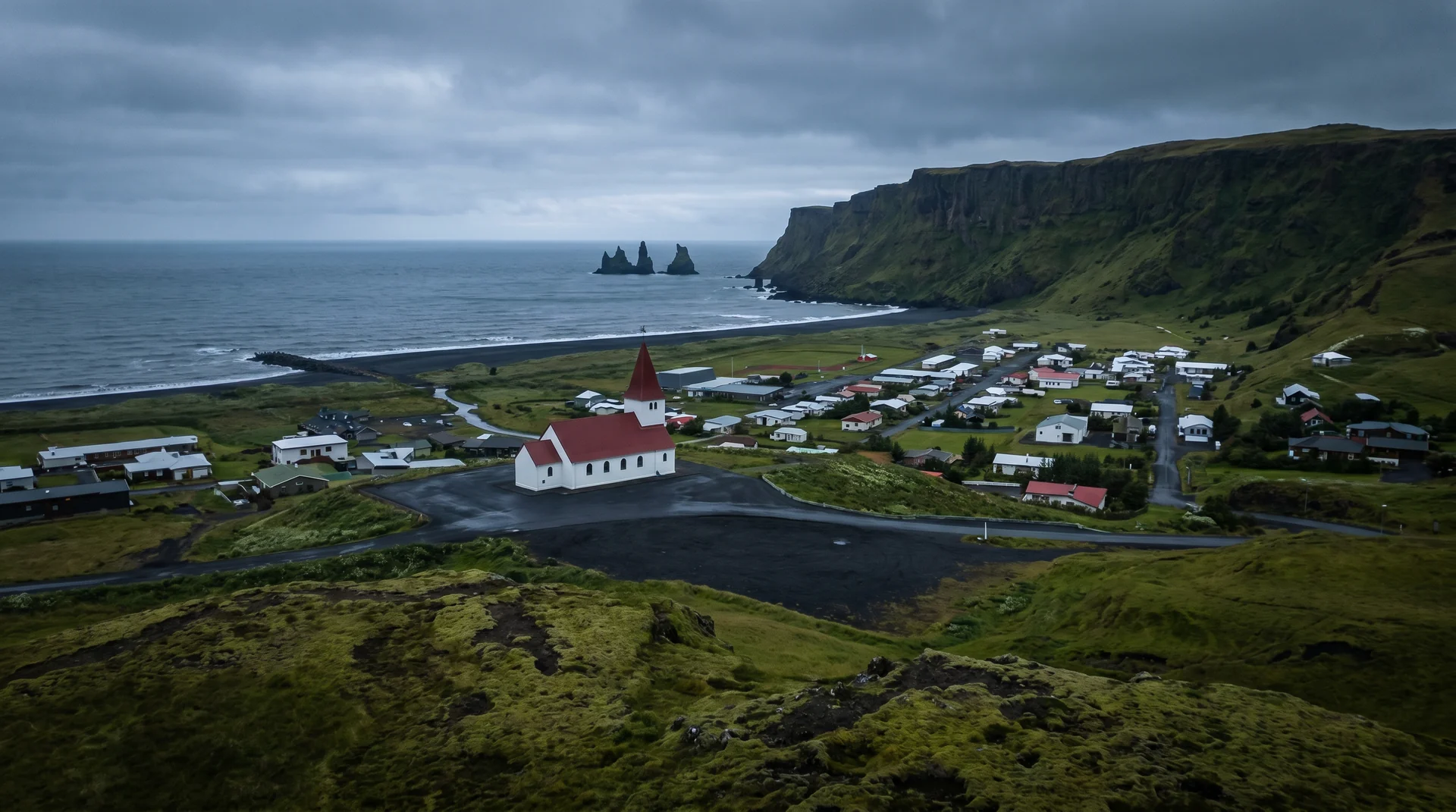
Vík í Mýrdal
Iceland's southernmost village — 350 people, one fuel station, a red-roofed church on a hill, and the last services before the long lava-and-sand drive to Skaftafell.
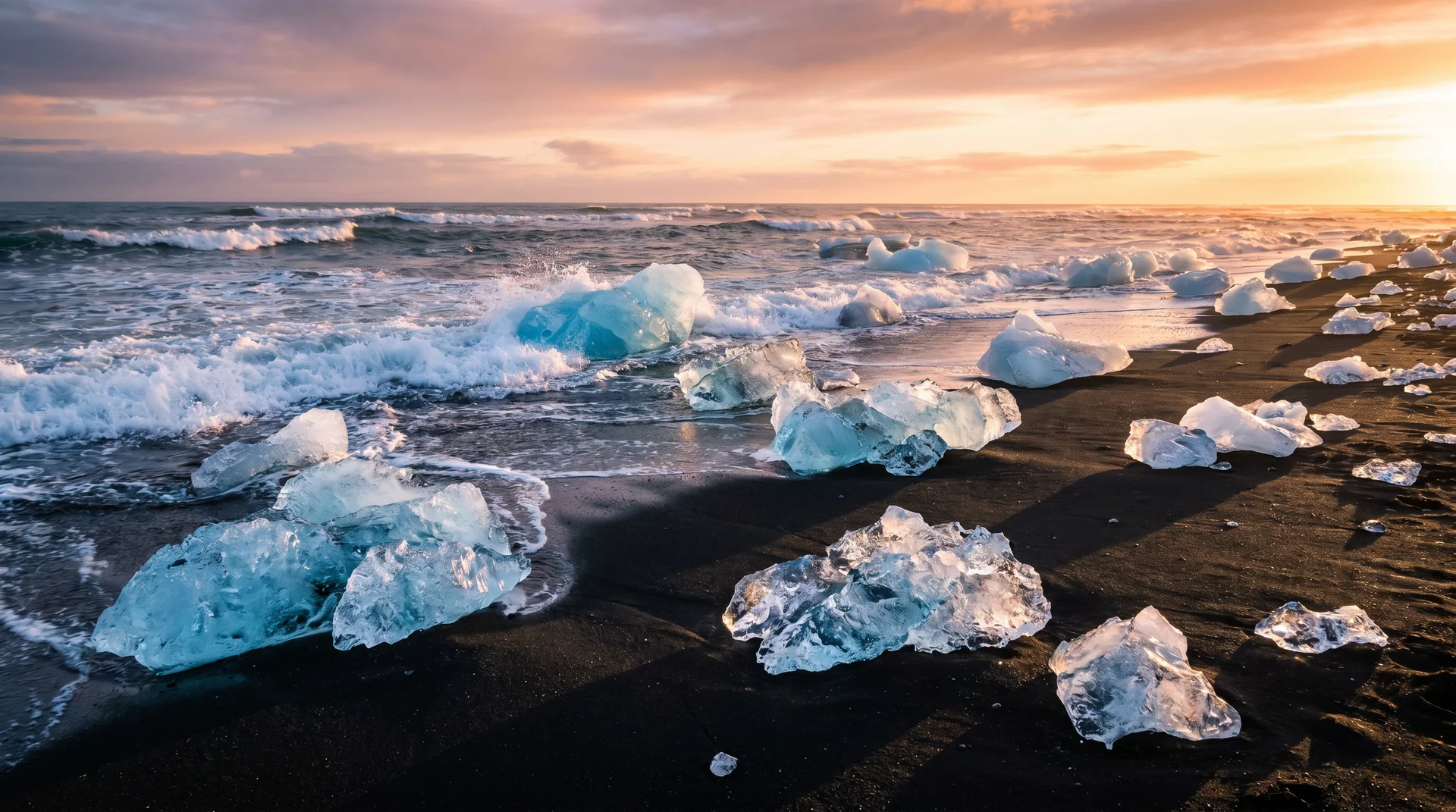
Diamond Beach
The black-sand counterpart to Jökulsárlón.
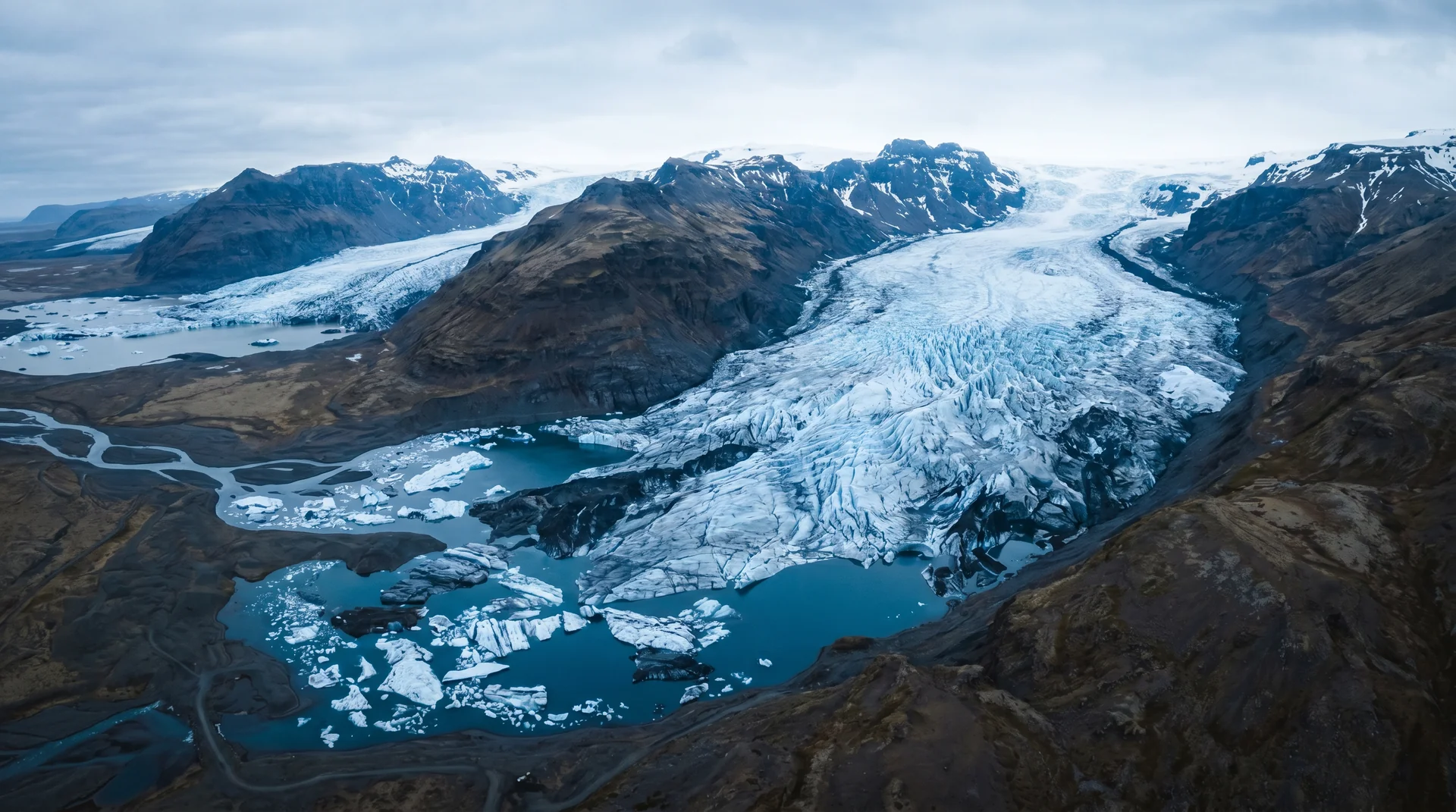
Vatnajökull
7,700 km² of ice — larger than all of Iceland's lakes and farmland combined.
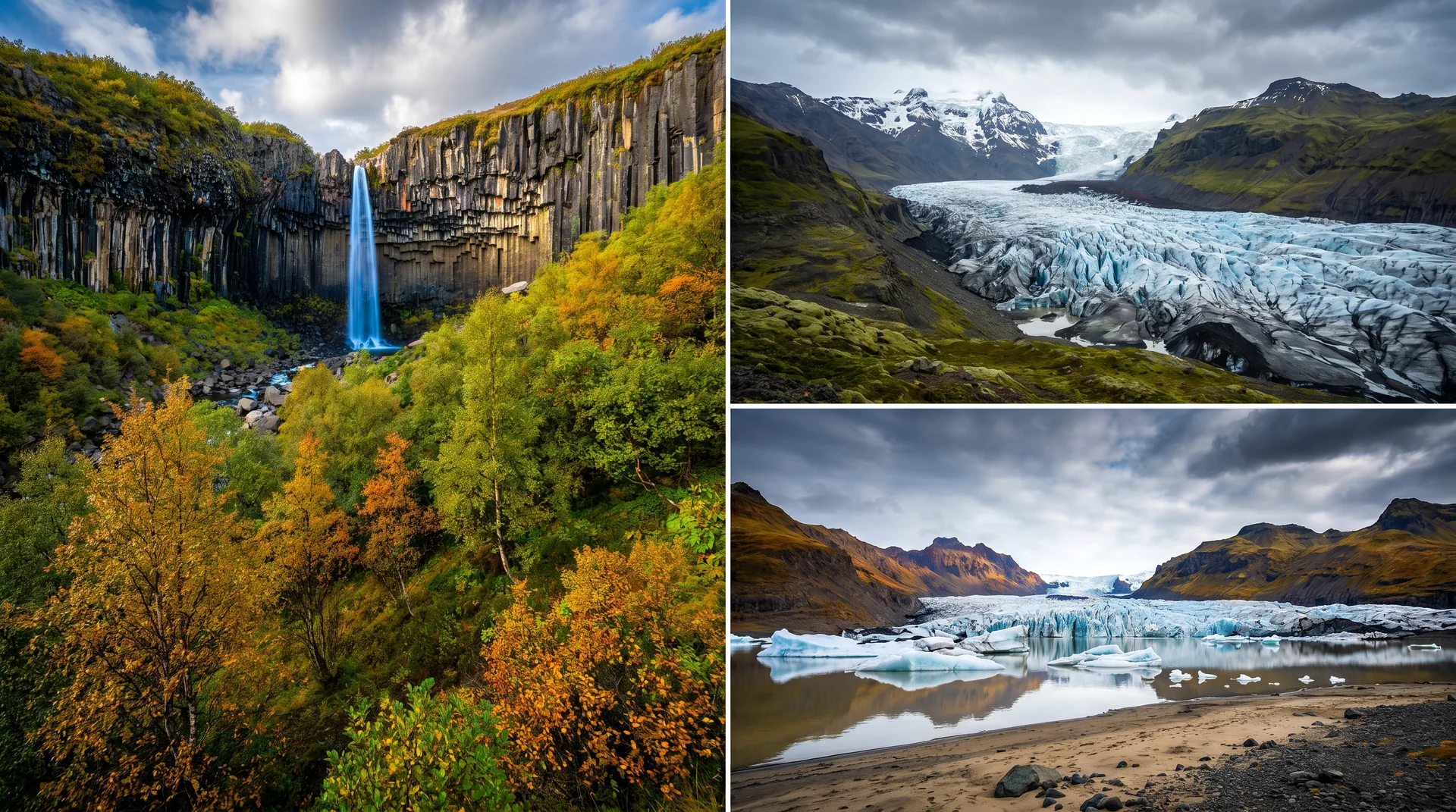
Skaftafell
The hiking nucleus of Vatnajökull National Park — three glacier tongues, a basalt-column waterfall, and trails that go from 30 minutes to a full day.
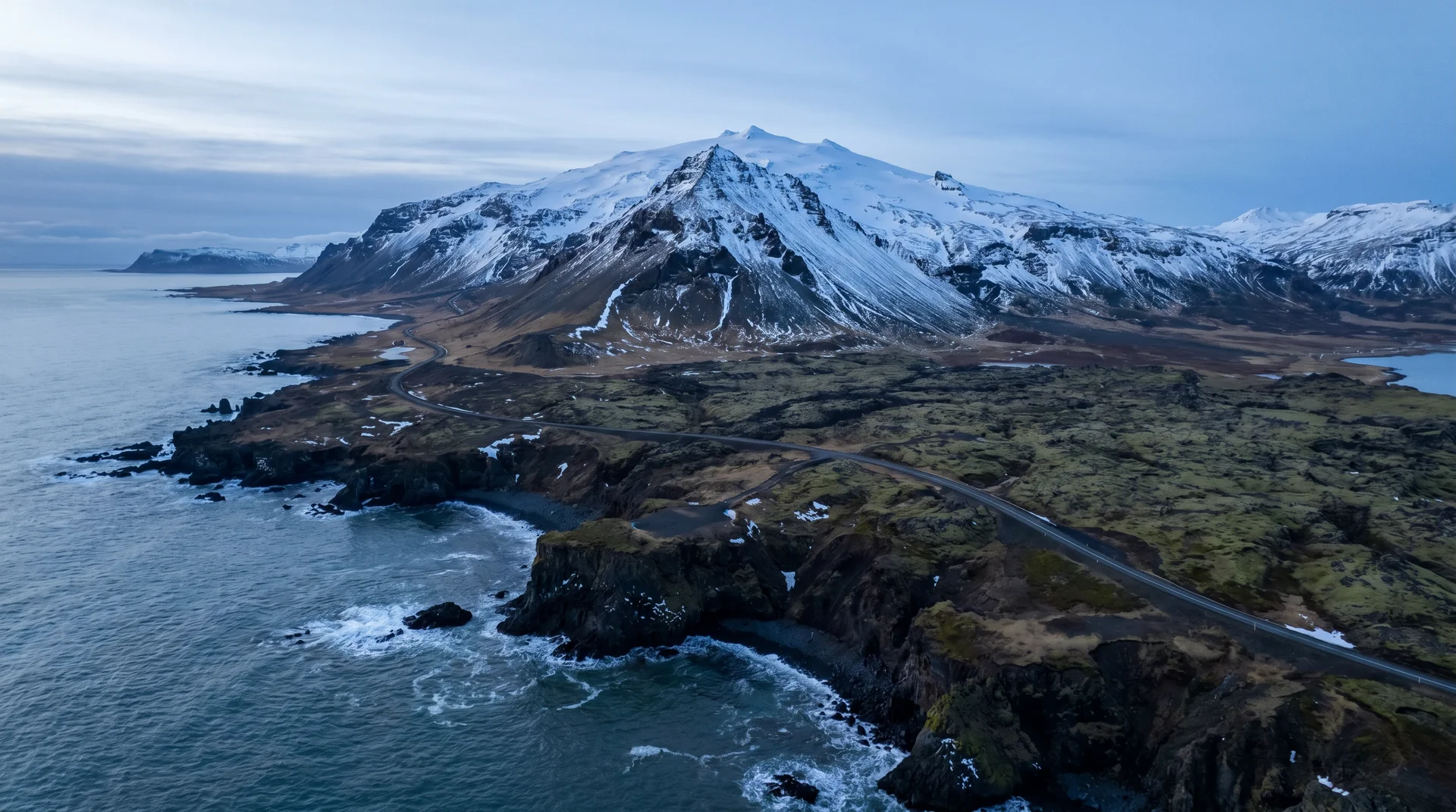
Snæfellsjökull
The 1,446-metre volcano under a glacier at the western tip of Snæfellsnes — Jules Verne's portal to the centre of the Earth, and one of the most prominent landmarks in southwest Iceland.
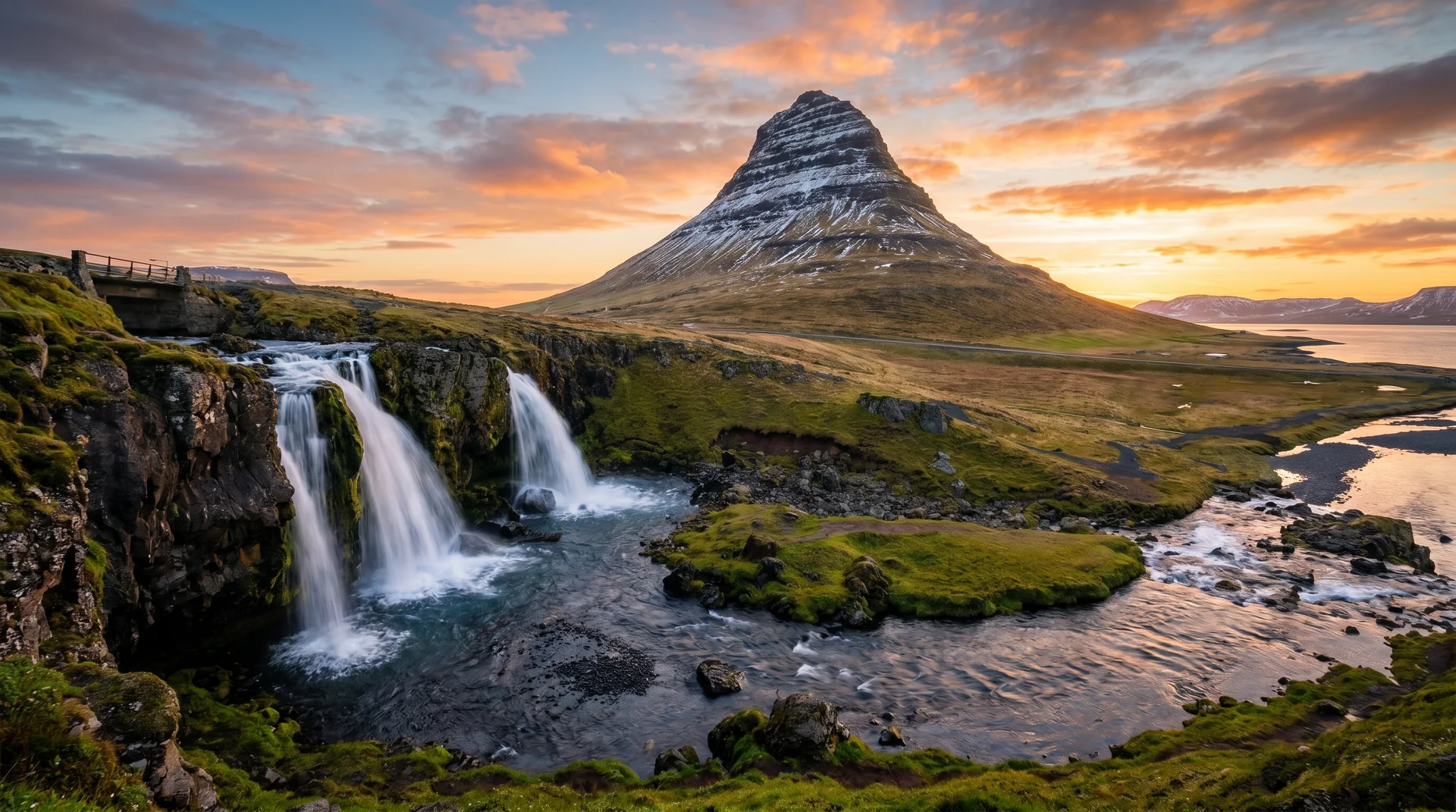
Kirkjufell
Iceland's most photographed mountain — 463 metres of steep basalt above a triple-falls foreground on the north side of Snæfellsnes.
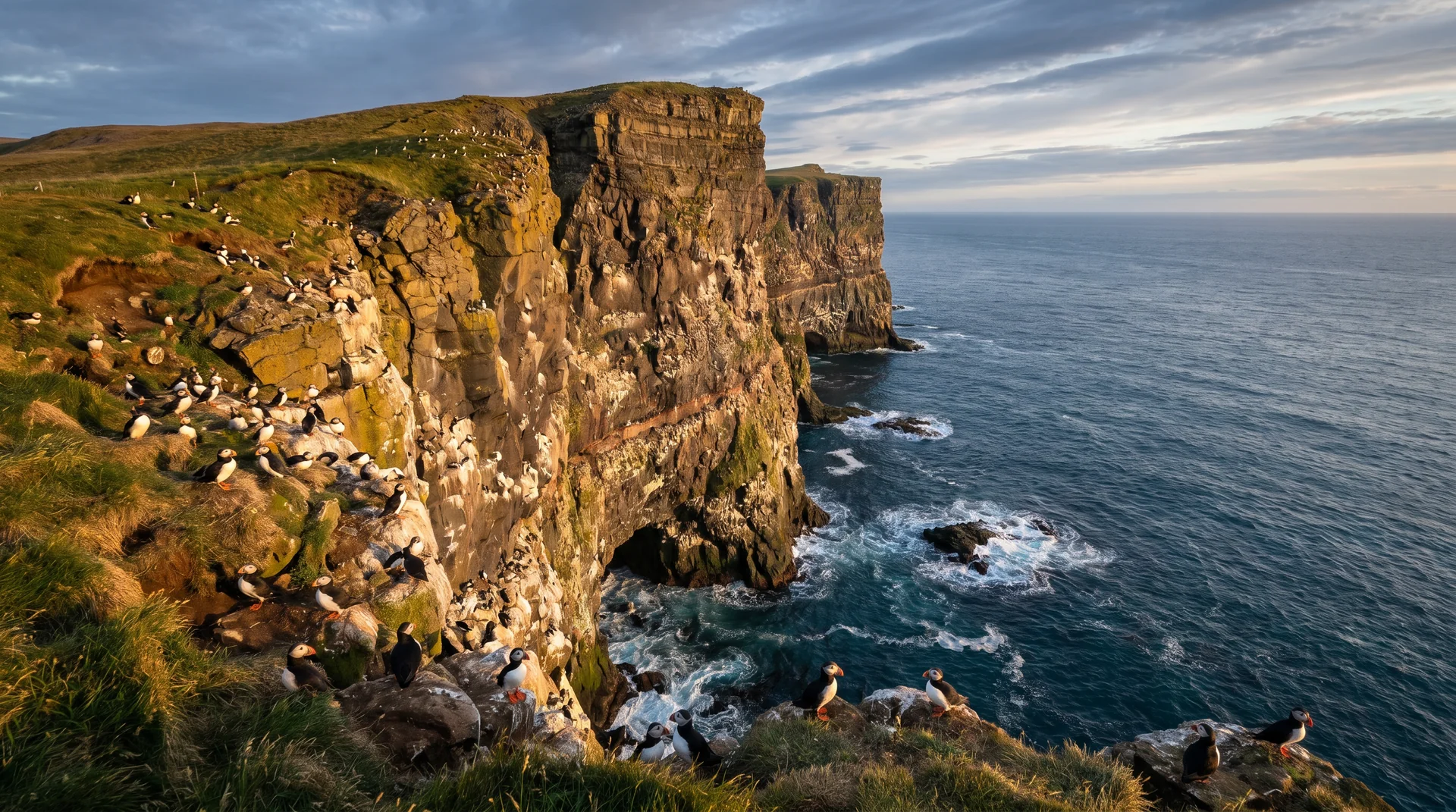
Látrabjarg
Europe's largest bird cliff — 14 kilometres long, 440 metres tall, home to one of the largest puffin colonies in the world.
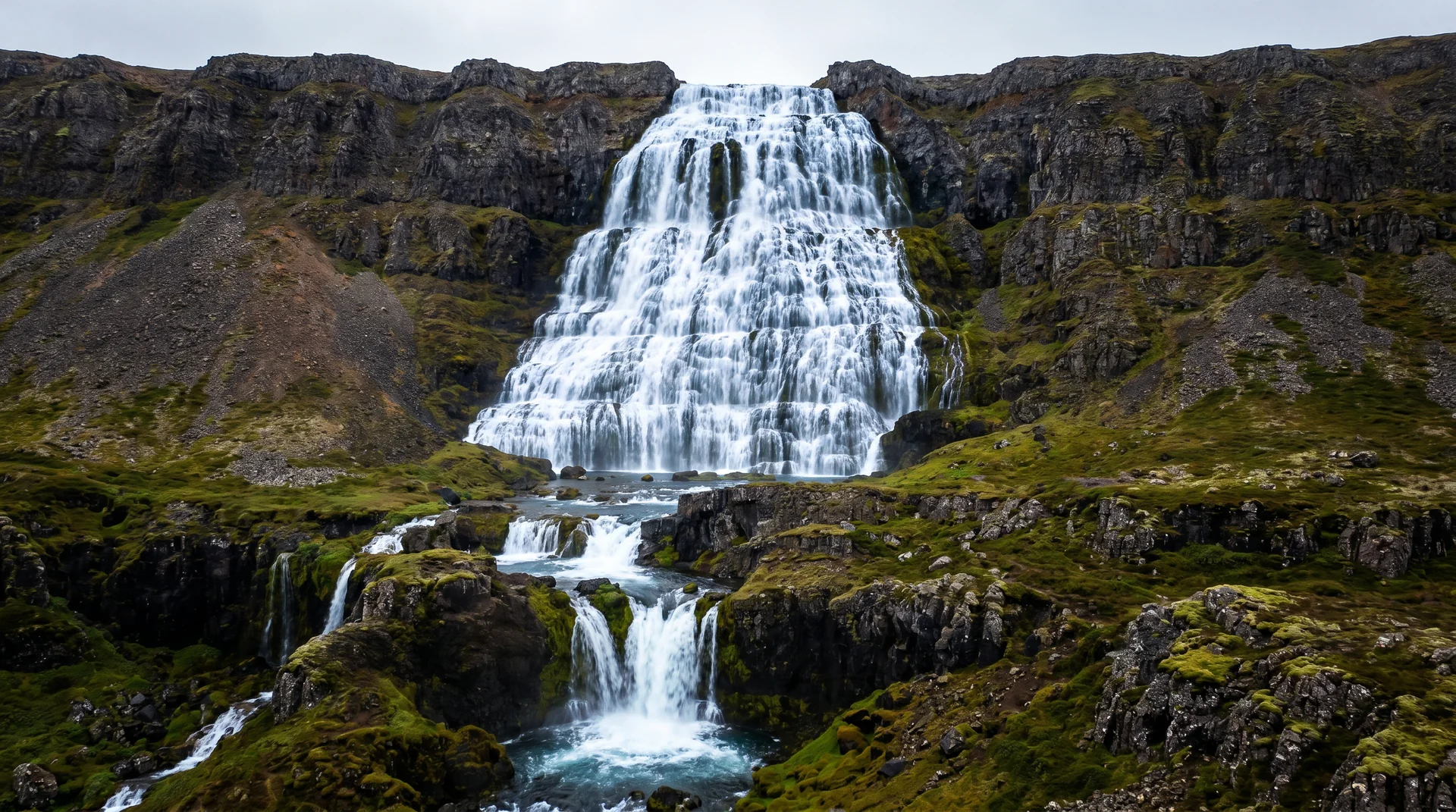
Dynjandi
Six stacked cascades forming a 100-metre veil — the largest waterfall in the Westfjords and one of the most underrated in Iceland.
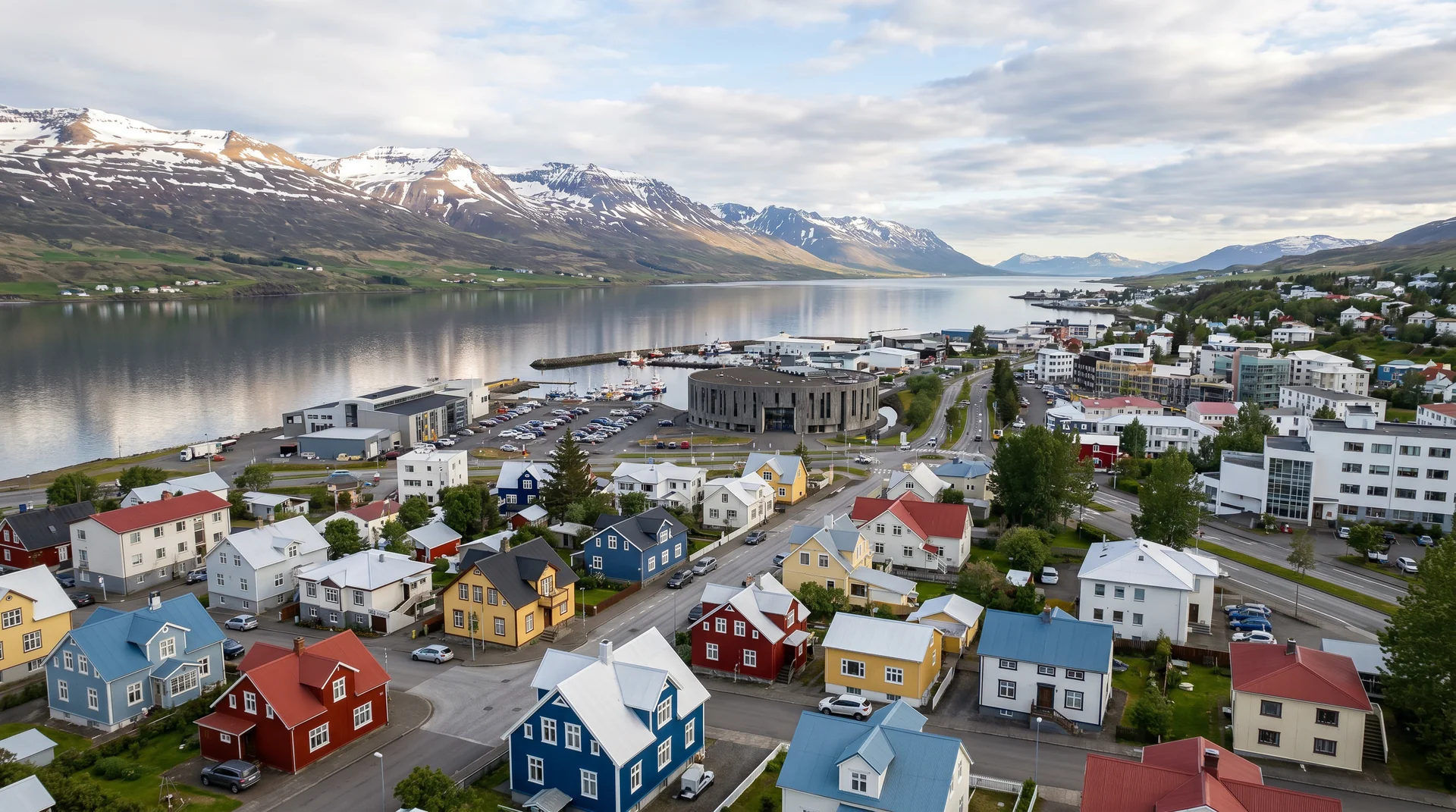
Akureyri
The unofficial capital of the north — 19,000 people, a heart-shaped traffic light, a botanic garden near the Arctic Circle, and the drier microclimate that makes it Iceland's aurora-friendly base.
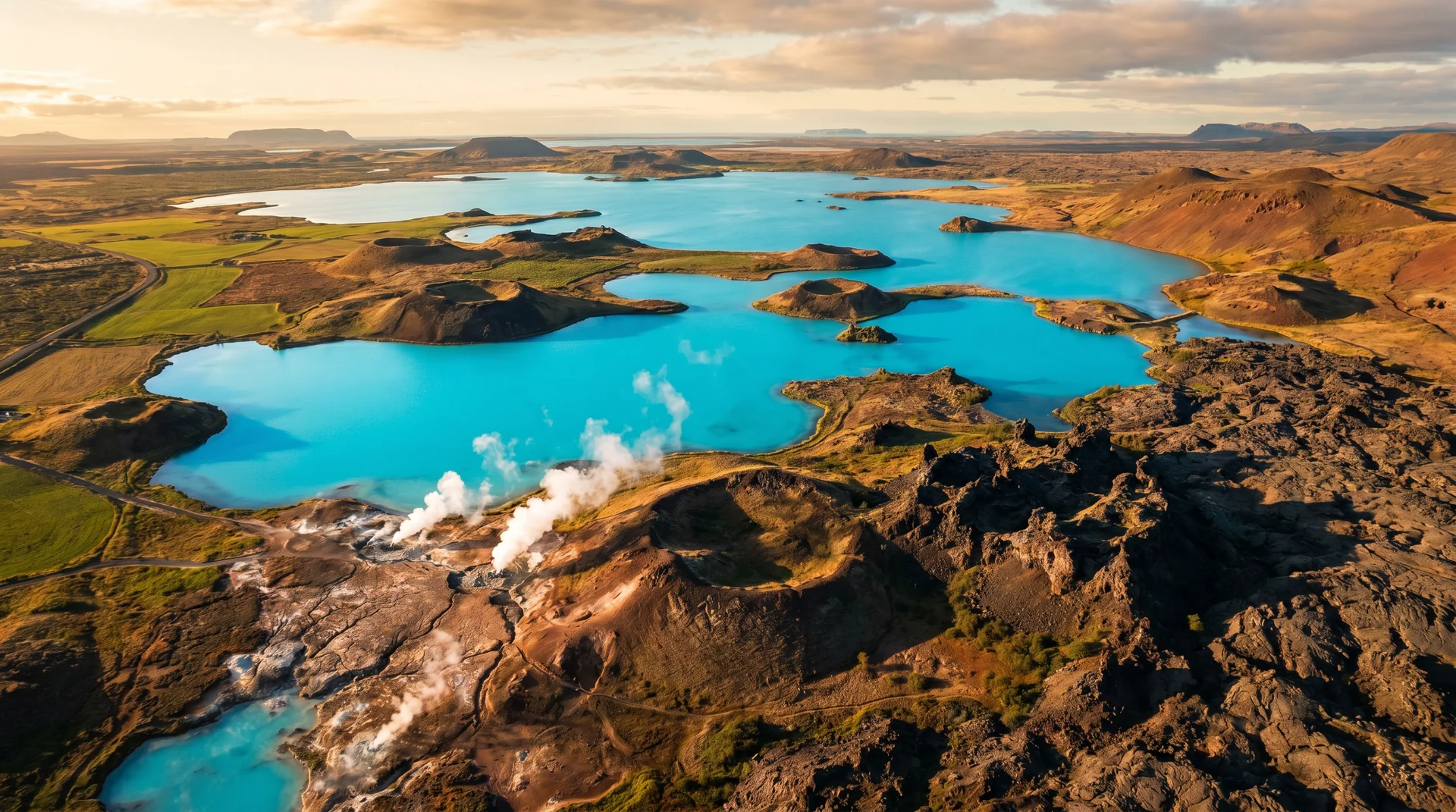
Mývatn
A milk-blue volcanic lake surrounded by pseudo-craters, lava castles, fumaroles, and a geothermal spa that locals quietly prefer to the Blue Lagoon.
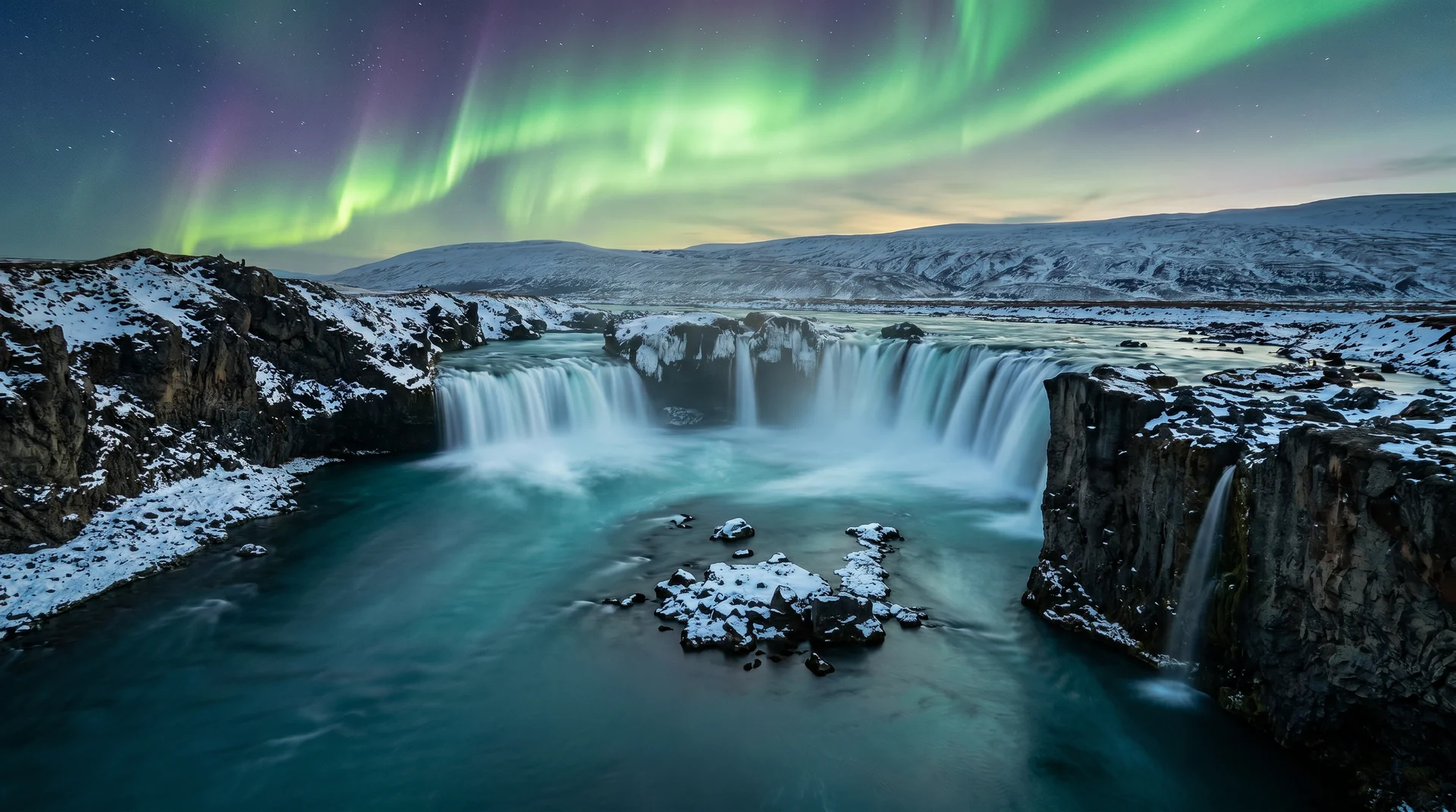
Goðafoss
The Waterfall of the Gods — a 30-metre-wide horseshoe on the Ring Road between Akureyri and Mývatn.
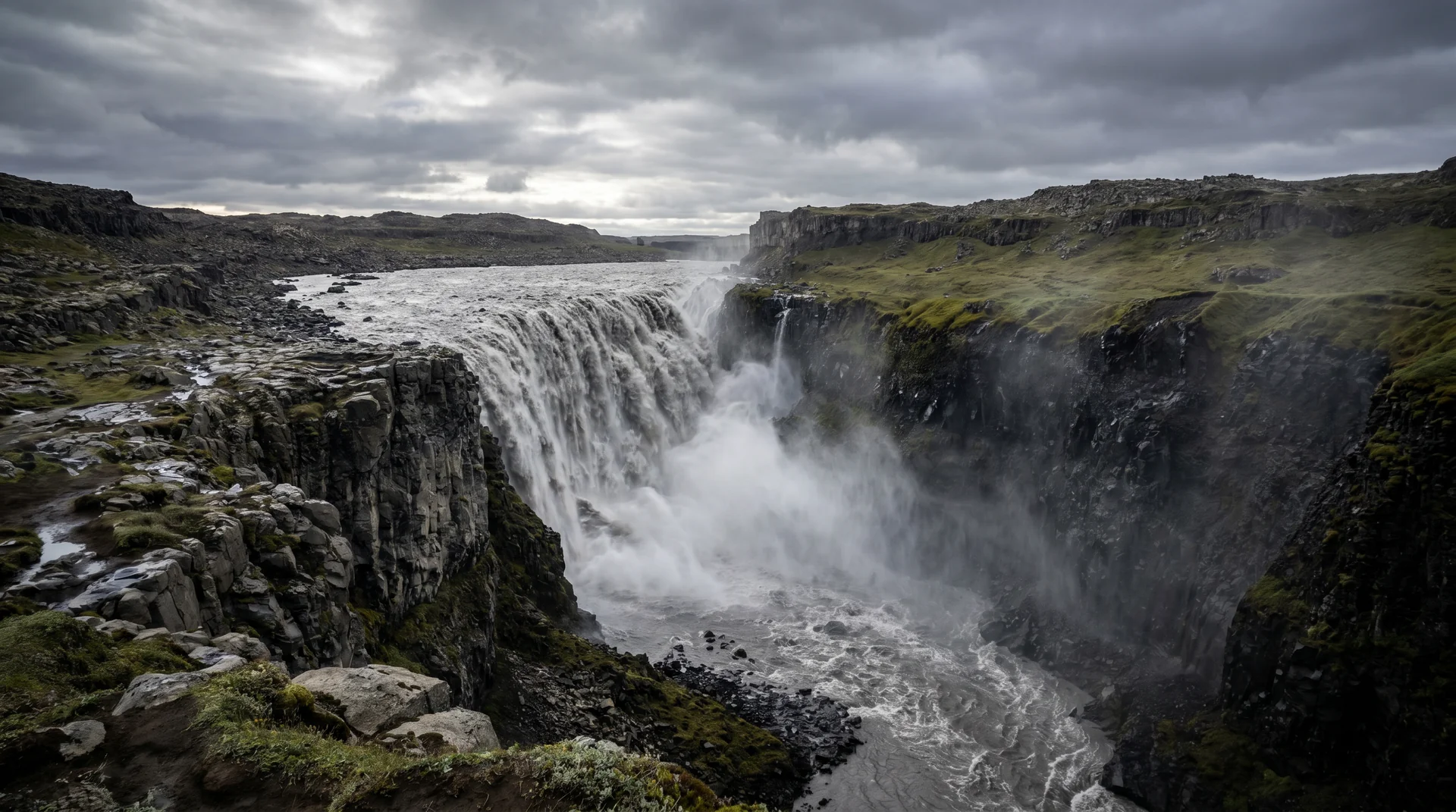
Dettifoss
Europe's second most powerful waterfall — 100 metres wide, 44 metres tall, the silt-grey water of Jökulsá á Fjöllum roaring into the Jökulsárgljúfur canyon.
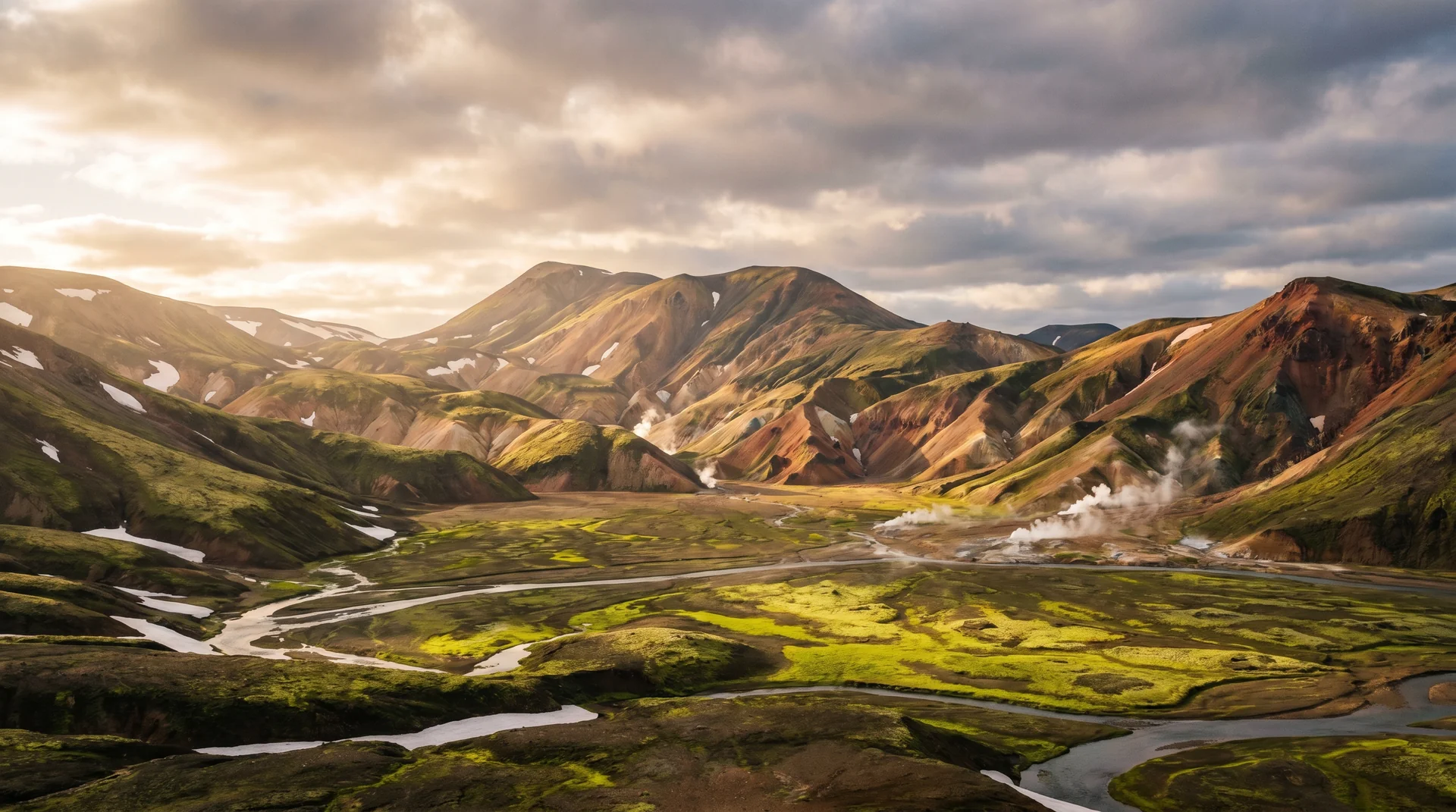
Landmannalaugar
Rhyolite mountains in pink, orange, green and grey — and a hot river you can soak in at the end of every hike.
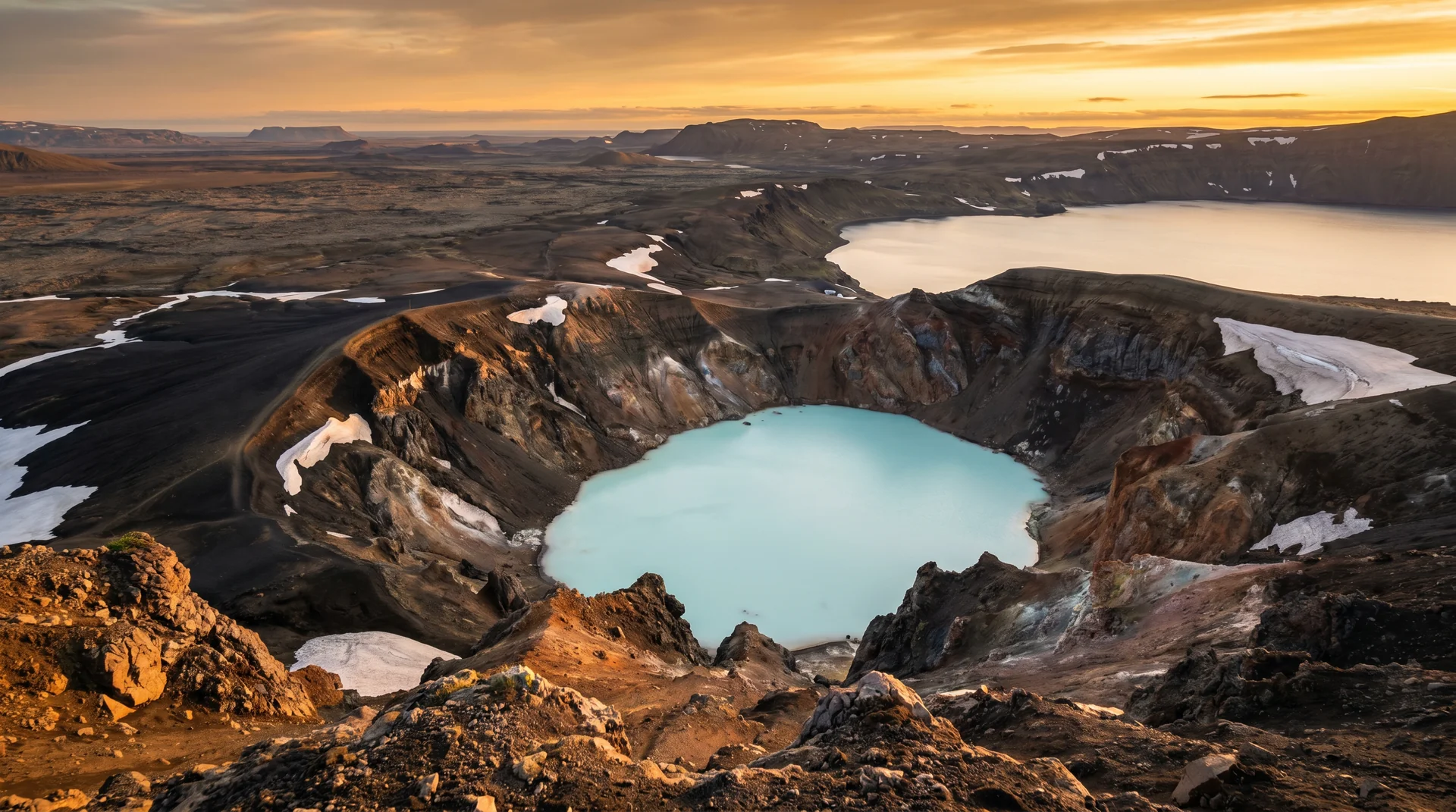
Askja
A remote volcanic caldera in the central highlands — 8 kilometres wide, holding a deep blue crater lake and a smaller geothermal lake (Víti) you can bathe in.
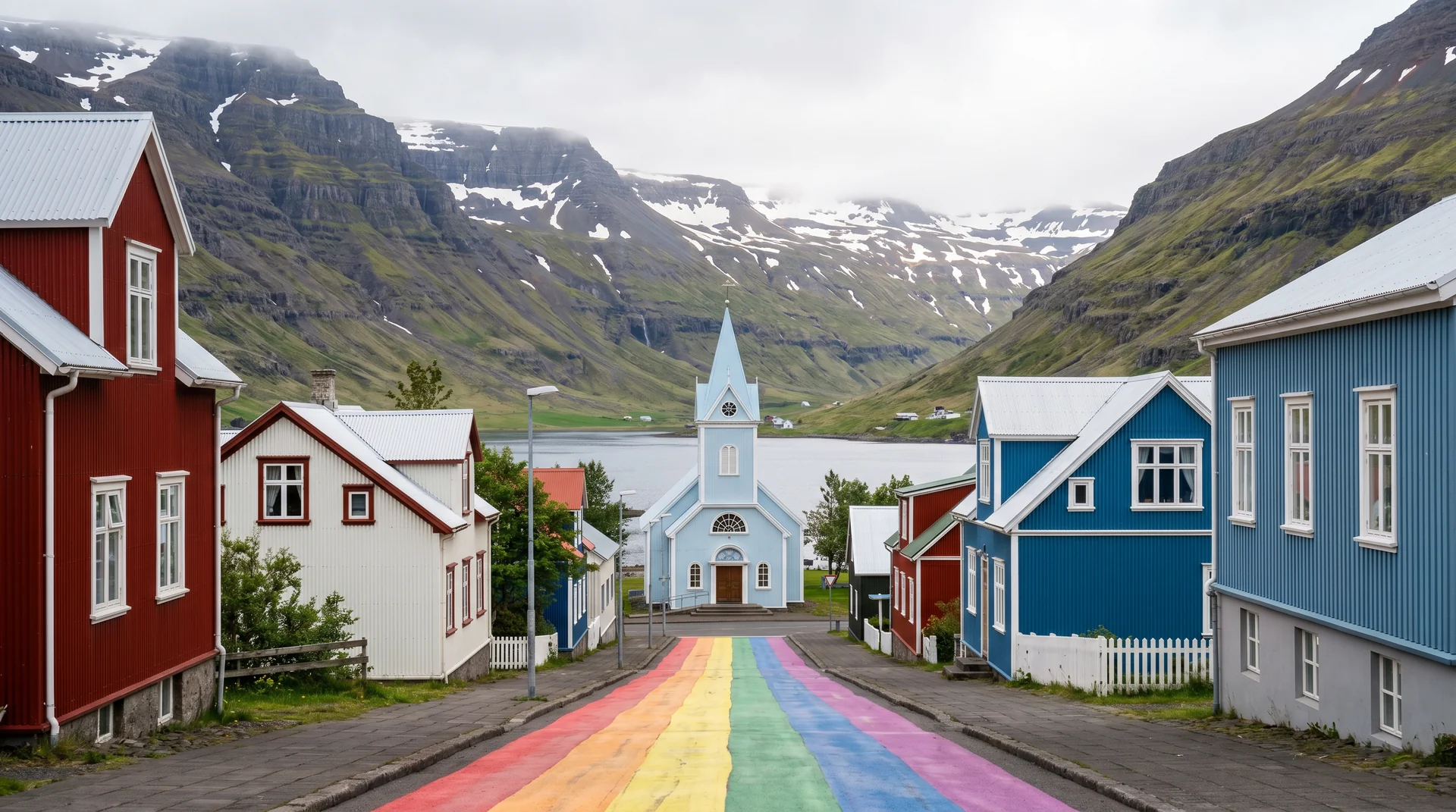
Seyðisfjörður
Coloured wooden houses, a rainbow-painted street to a blue church, a deep fjord with a ferry from Denmark — Iceland's east-coast jewel, and the only place you can arrive by sea from mainland Europe.
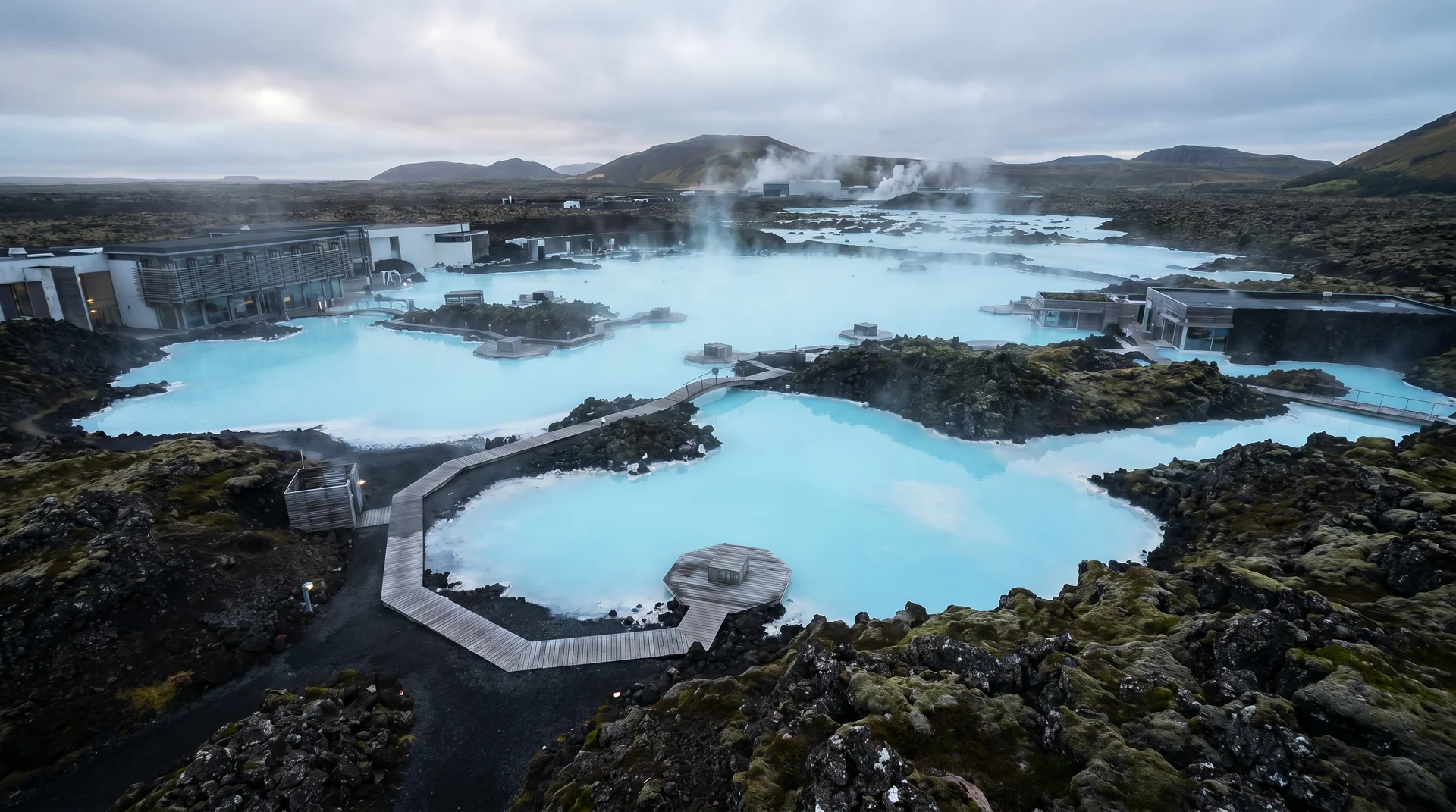
Blue Lagoon
The most famous geothermal spa in Iceland — milk-blue silica water in a black lava field at 38°C year-round.
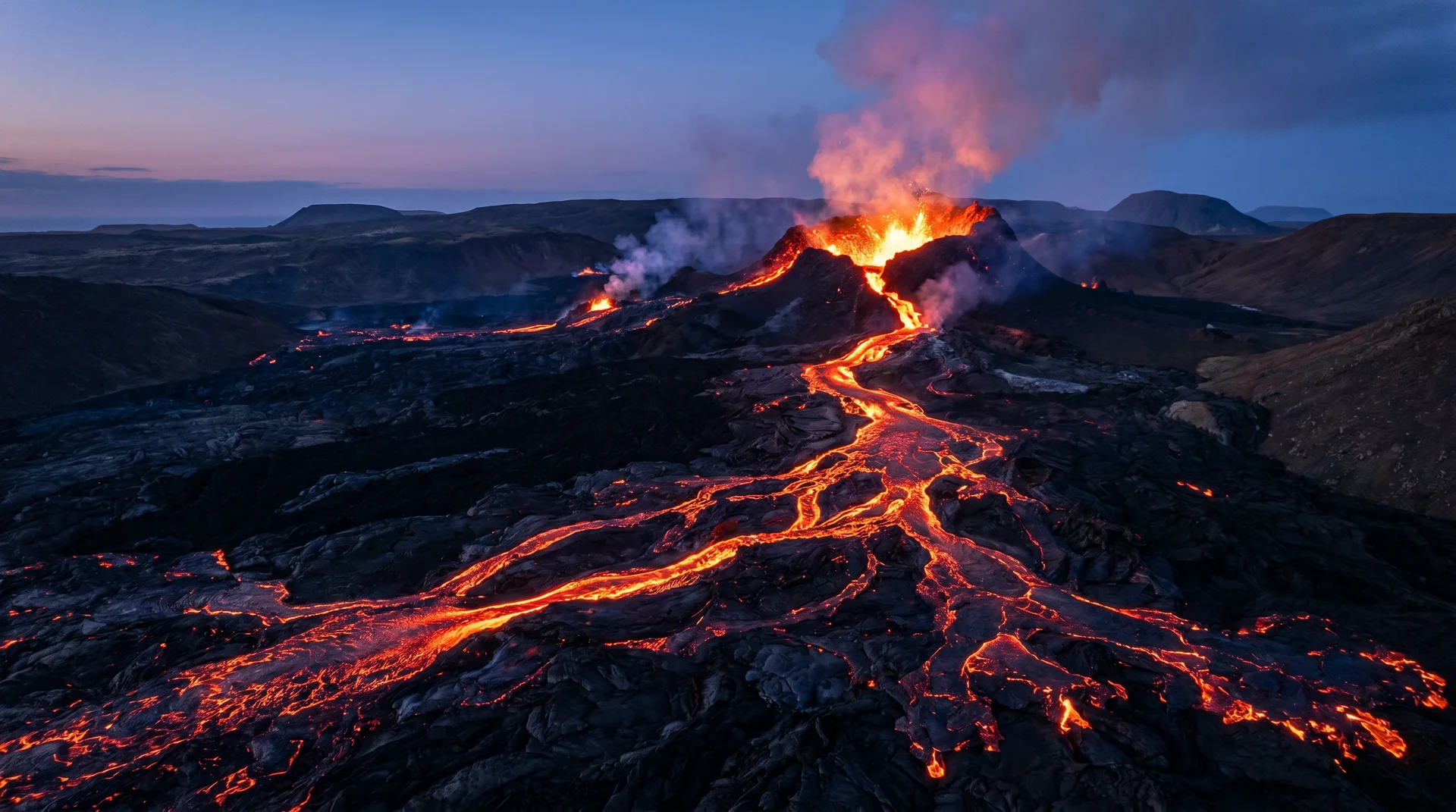
Fagradalsfjall
The volcano that woke up in March 2021 after 6,000 years of dormancy, on a peninsula quiet for nearly 800 years — and has erupted repeatedly since.