Goðafoss
The Waterfall of the Gods — a 30-metre-wide horseshoe on the Ring Road between Akureyri and Mývatn. Named after the moment in 1000 AD when the lawspeaker Þorgeir threw the pagan idols into it.
Why this place matters.
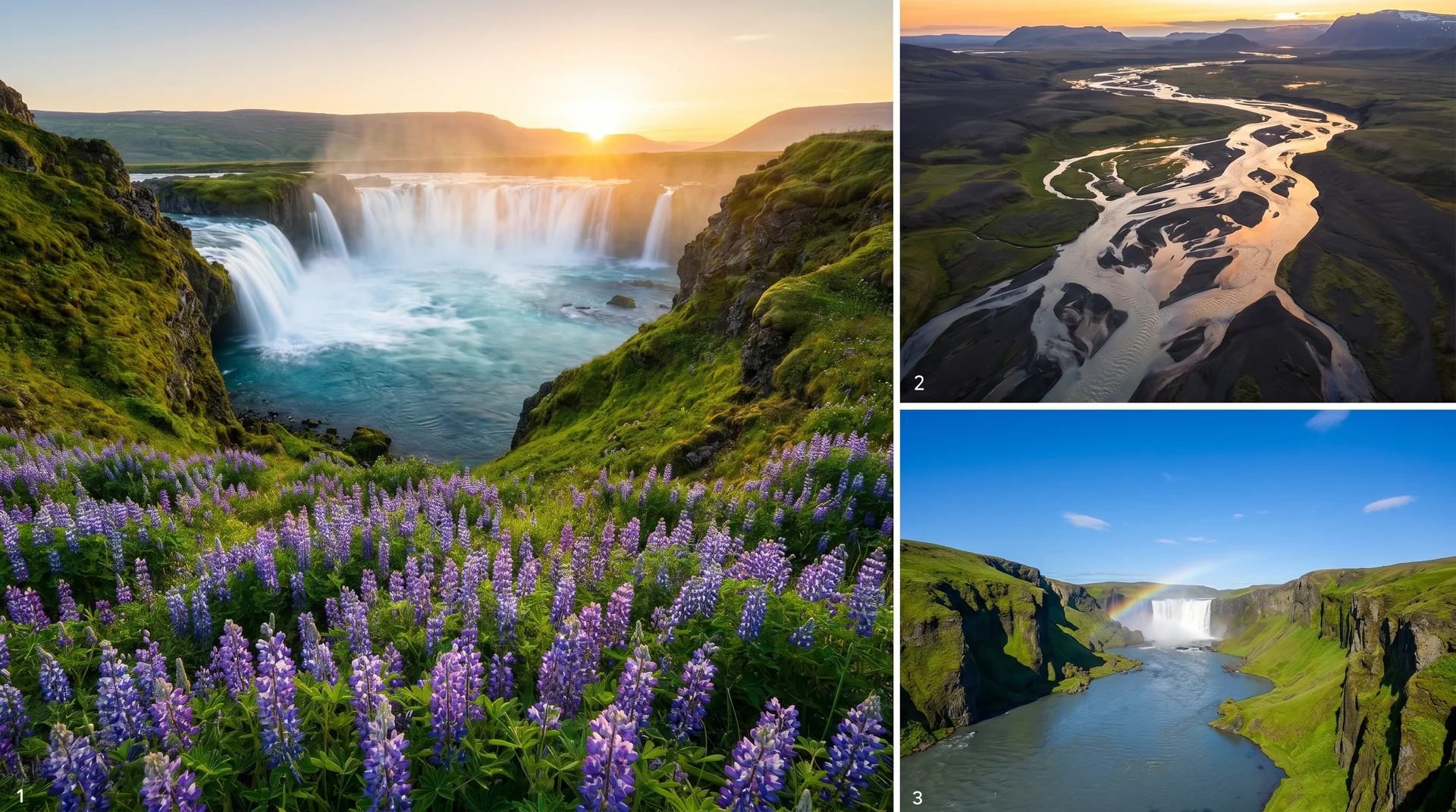
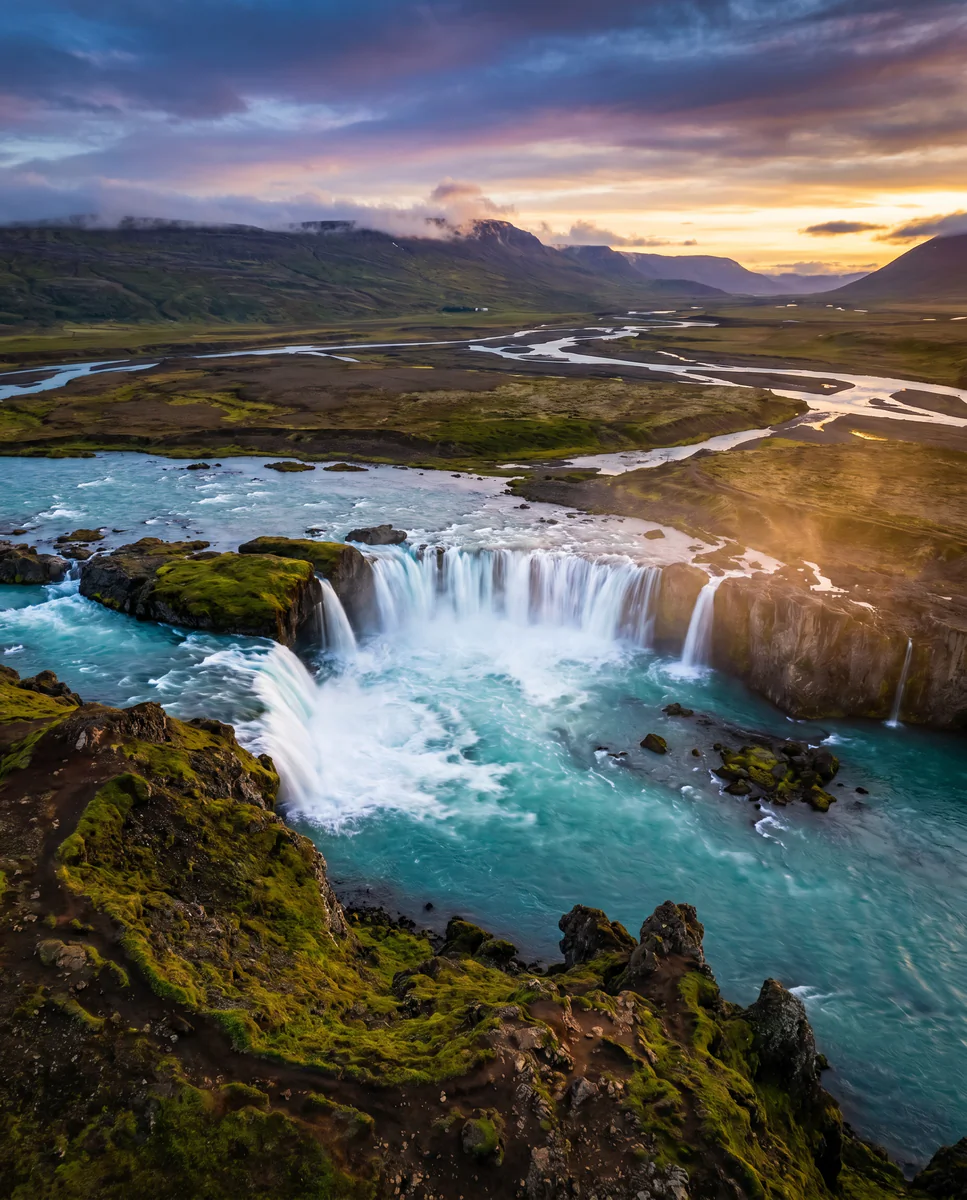
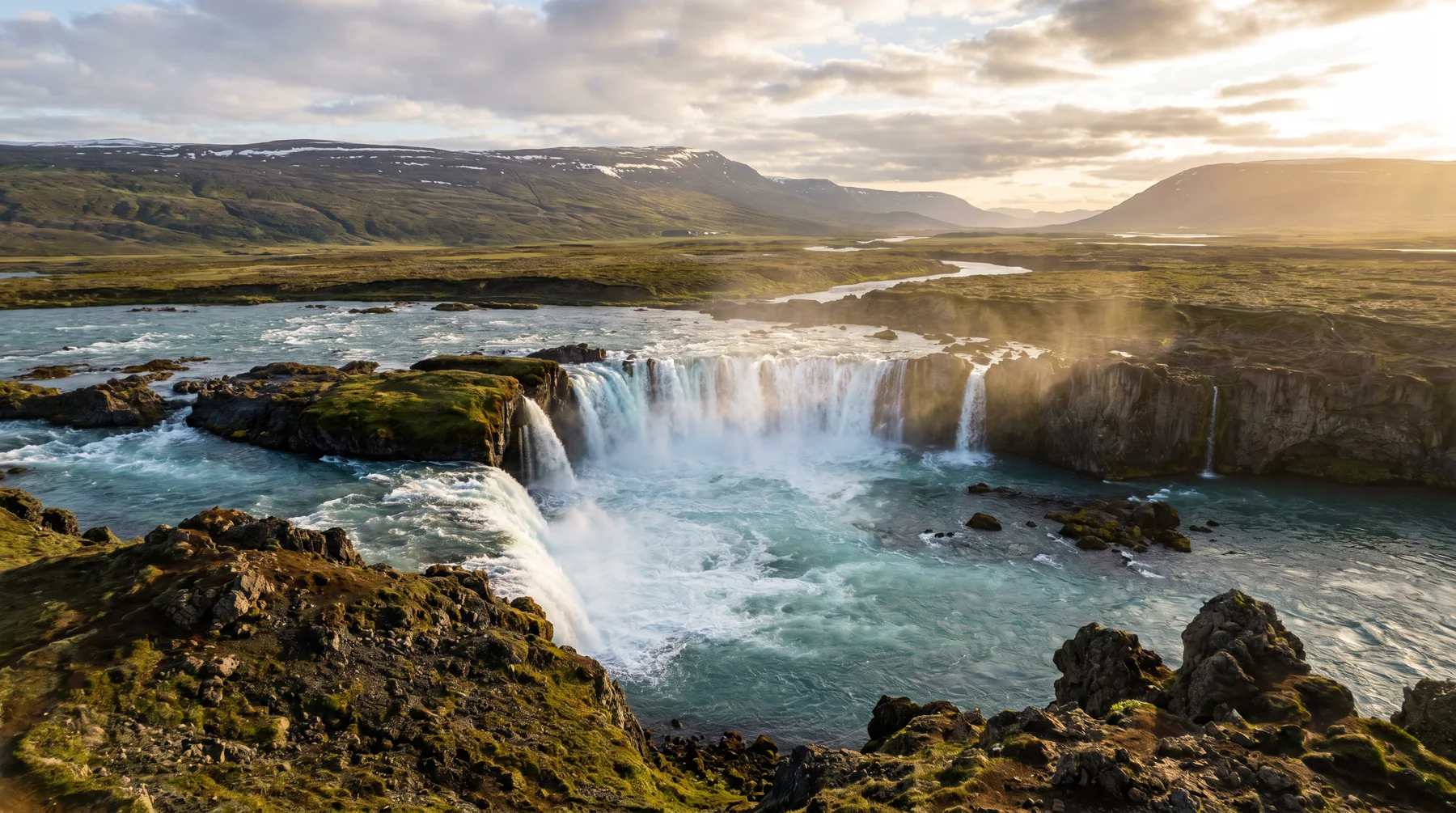
Goðafoss is wider than it is tall — 30 metres of curving lip dropping 12 metres into a basalt basin. The river bends just before the falls, which is why the horseshoe shape is so symmetrical.
Two viewpoints: west bank (the main pullout) gives the iconic head-on shot; east bank (cross the road, follow the path 200 m) gives a quieter side angle and the descent to the base. Most travelers stop 20 minutes and continue; the richer visit gives both banks 45 minutes and a winter visit's frozen edges are striking.
North · between Akureyri + Mývatn.
Roadside on Route 1. 45 min from Akureyri, 45 min from Mývatn.
Worth visiting — read the fine print.
Honest, not cynical. These are the things returning visitors tell first-timers.
West side has café + main pullout. East side is the quieter angle. Both worth doing — they're only 5 min apart by car.
Cross to the east lot, walk 200 m to the rim. Composition with the horseshoe + river bend is the better photo.
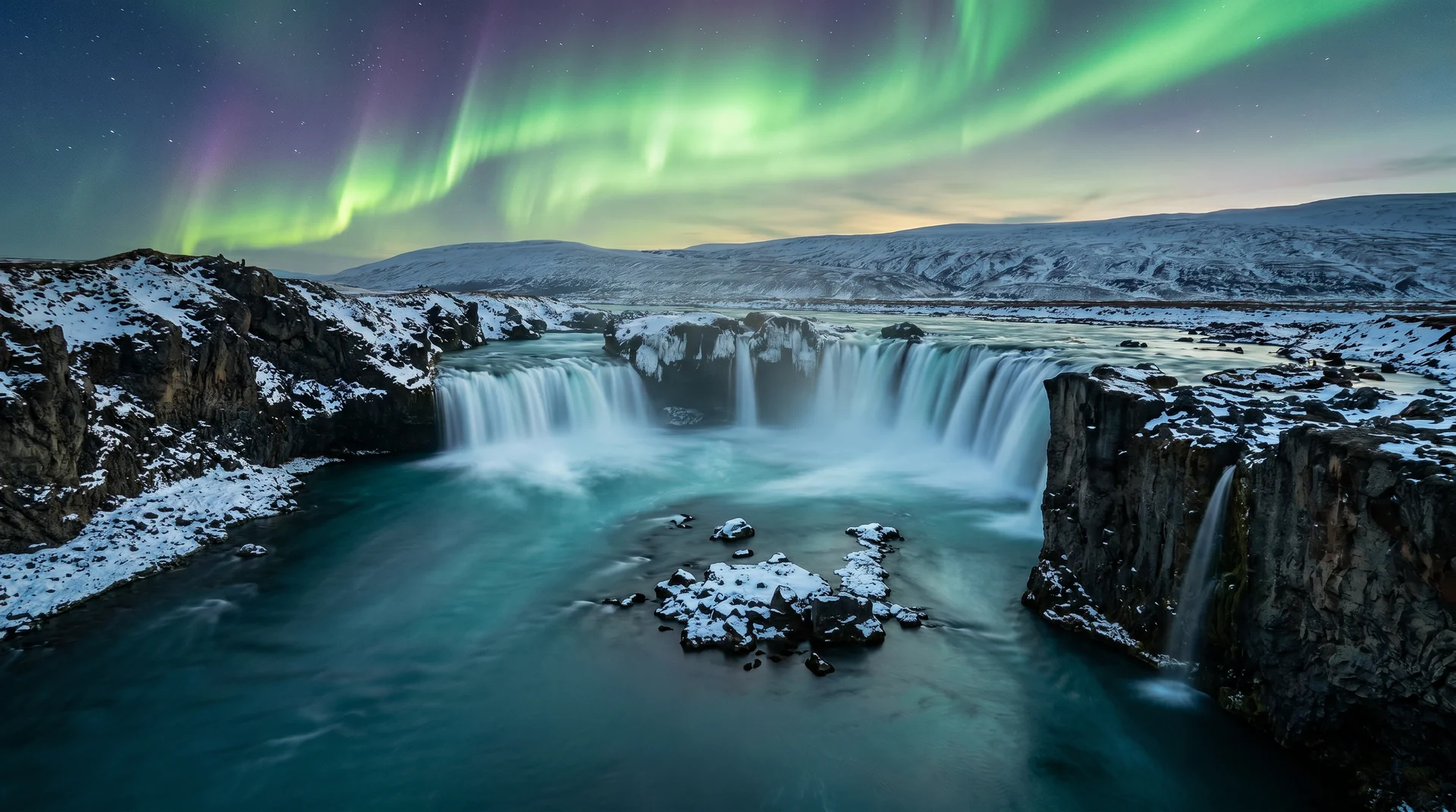
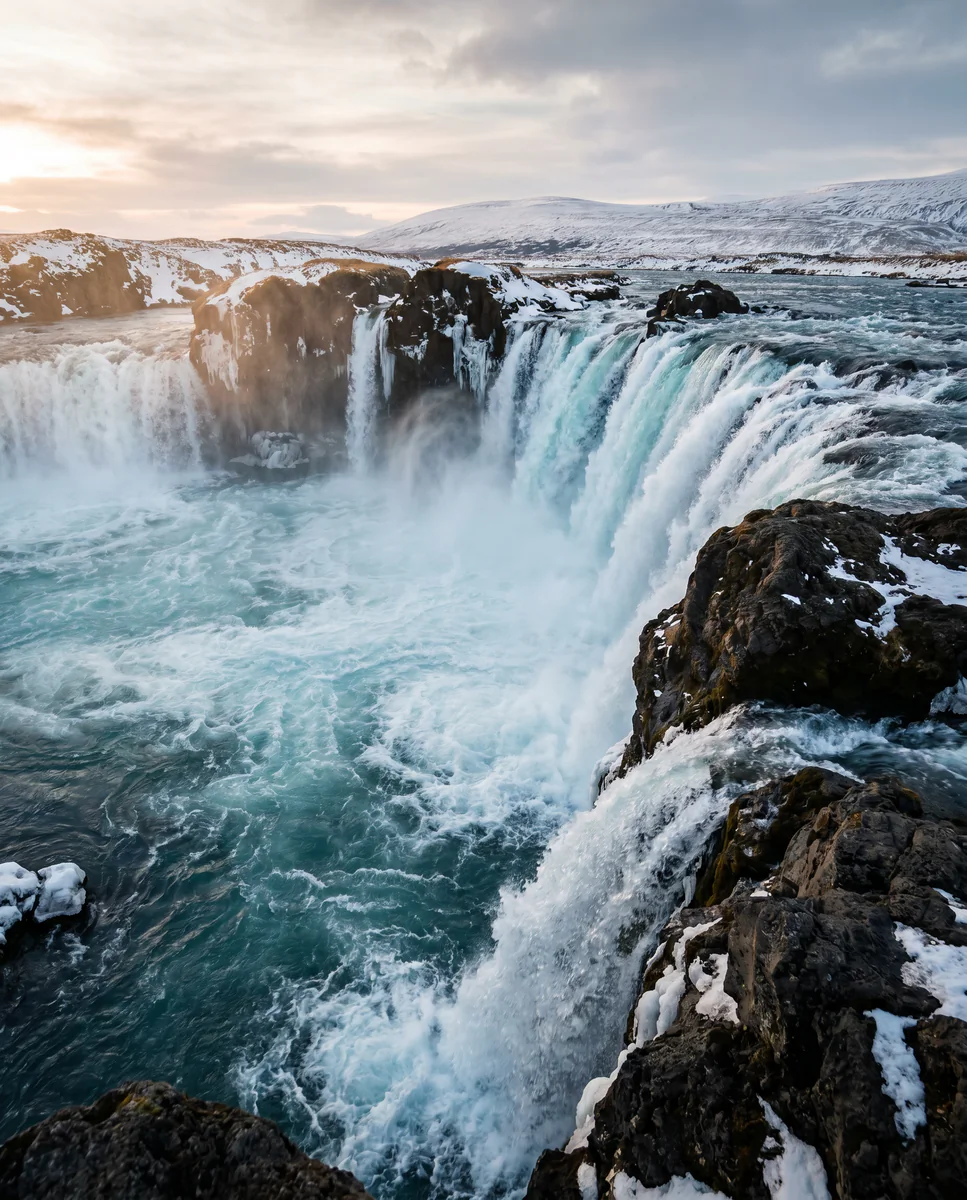
Jan – Mar. Edges freeze into a sculpted lip. Long exposure tripod for silk-water + sharp ice contrast.
In 1000 AD, after Iceland's Alþingi voted to convert to Christianity, the lawspeaker Þorgeir Þorkelsson reputedly threw the pagan idols into this waterfall. Hence: Waterfall of the Gods.
Fosshóll has fuel, food, basic shop, toilets. The natural lunch stop for the Akureyri – Mývatn drive.
Sun moves around to side-light the horseshoe 2 – 5pm summer. Backlight earlier; flat by 6pm.
When the place is itself.
Year-round. Summer flow is highest; winter brings dramatic frozen edges; September shoulder gives the cleanest tonal range.
Light, shaped by ice.
200 m walk from east lot. Horseshoe + river bend + foreground rocks. Tripod helps.
The iconic angle. Wider lens. Long-exposure ND filter smooths the lip.
Jan – Mar. Snow + ice + dark river. Sharp tonal contrast — works as black-and-white.
Winter only. The horseshoe + arcs above. Compose with the falls smaller and more sky.
Getting there, calmly.
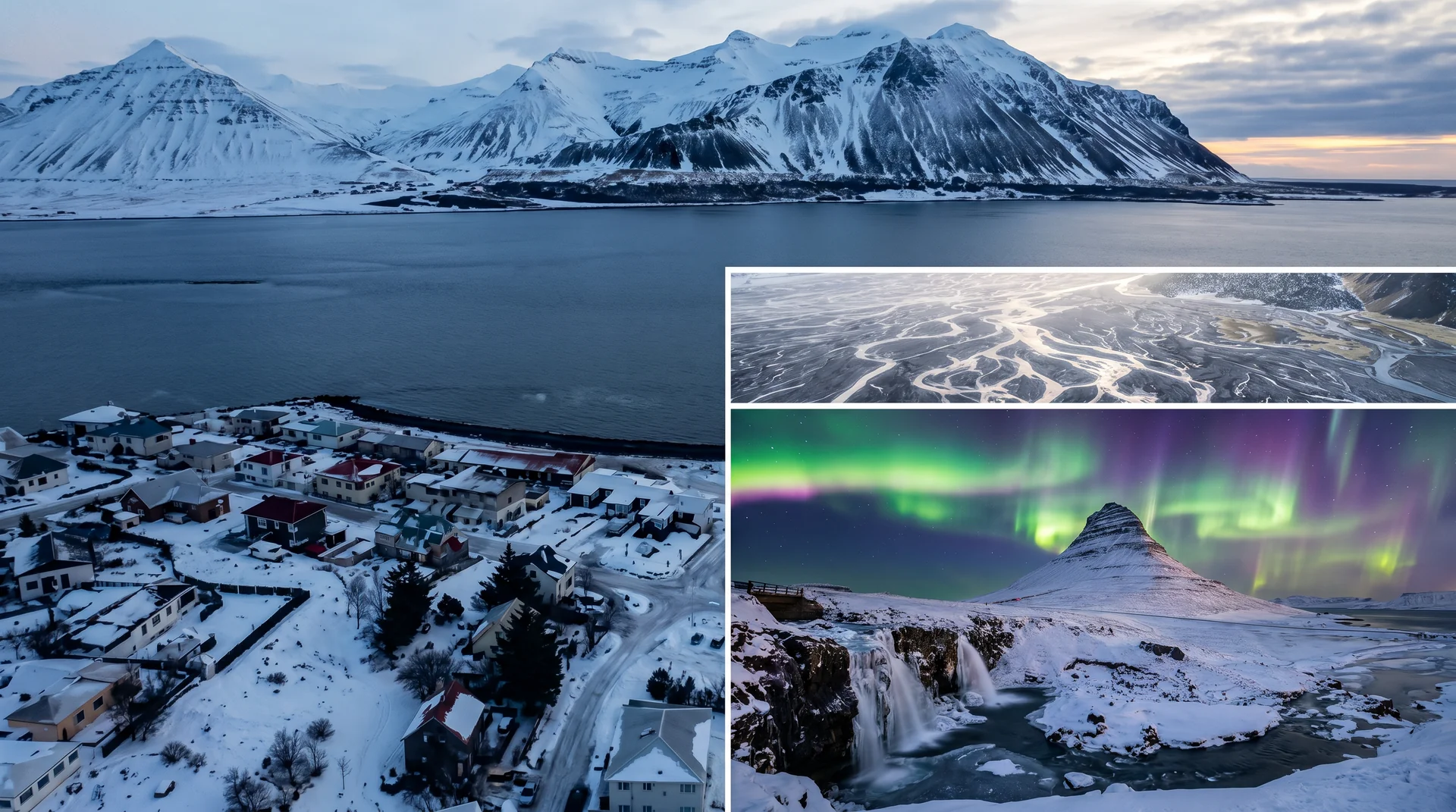
The place, four ways.
Within an hour.
- AkureyriNorthern base town
- MývatnGeothermal lake region
- HúsavíkWhale-watching capital
- LaugarTiny village with pool
- AldeyjarfossHighland basalt-column waterfall
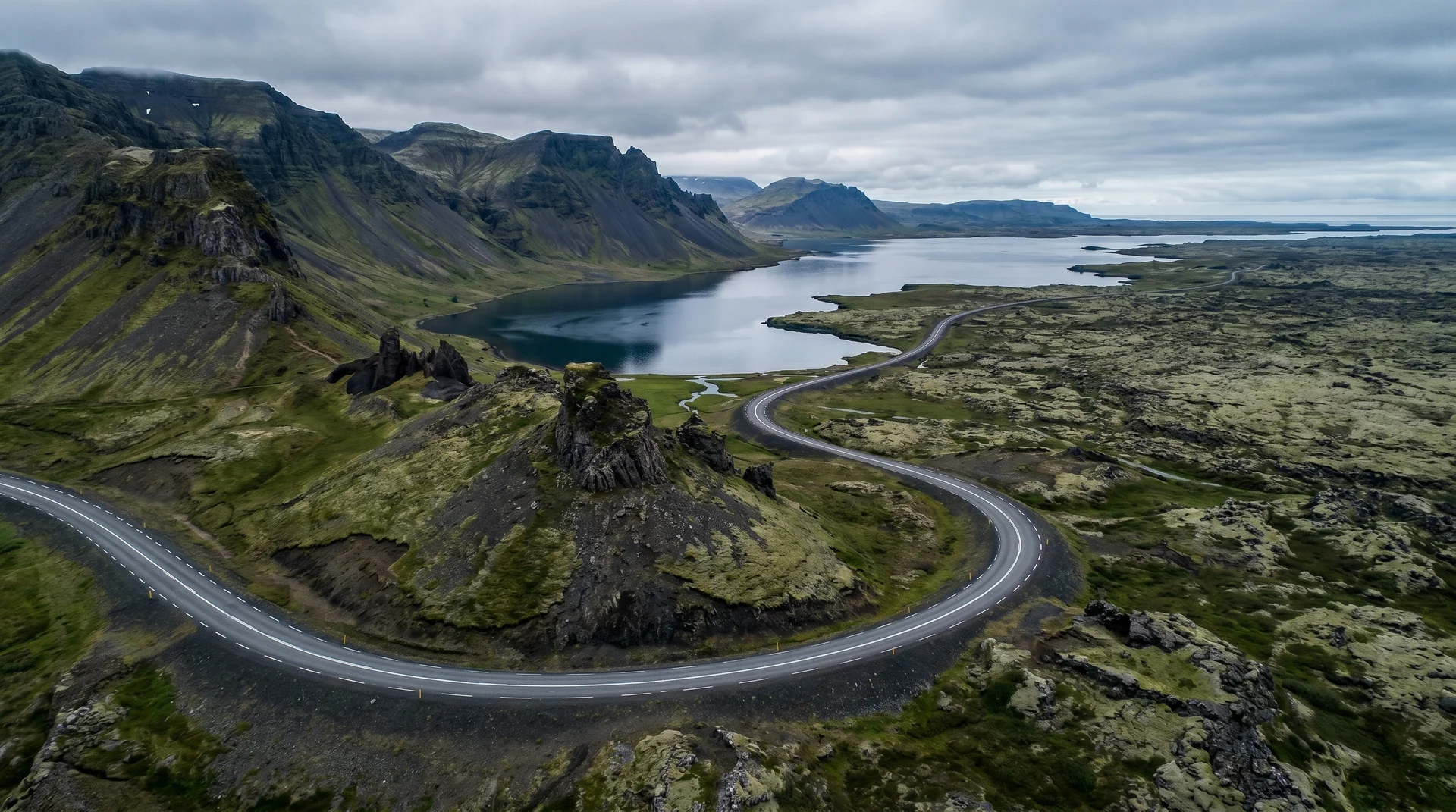
It lives on these routes.
Read this place differently.
What the place is doing right now.
Make Goðafoss part of your expedition.
Open it inside the Explorer to see it in context with terrain, season, and conditions — or plan a route that passes through.